
Spring Foraging Guide: 10 Wild Edibles You Can Find in Your Backyard and Woods
Discover the basics of spring foraging in this beginner-friendly guide! Learn how to identify wild edibles, forage safely, and enjoy nature’s bounty right in your backyard or woods.
There’s something magical about those first warm days of spring when the snow finally melts, the birds are singing again, and tiny green shoots start pushing up through the soil. That’s nature’s way of saying, “It’s time to go foraging!”
Whether you live on a little homestead, have a suburban backyard, or enjoy walks in the woods, spring is the perfect season to start exploring wild edible plants. And the best part? You don’t have to travel far. Many of the most useful and delicious plants can be found just steps from your door.
In this guide, I’ll share how to forage safely and responsibly this spring, including common edible plants you can find in both the backyard and the forest. We’ll also cover tips for identifying plants correctly, gathering ethically, and tips for getting started even if you’re a total beginner.
So grab a basket, slip on your boots, and let’s head outside. There’s a whole world of wild food waiting to be discovered!
Why Forage in Spring?
After a long winter, spring feels like nature’s grand reawakening. The earth warms, the trees bud, and the first edible greens begin to push through the soil, fresh, tender, and full of life. It’s the perfect time to start foraging, especially if you’re new to it.
Spring foraging offers a chance to reconnect with nature and your local landscape. You’ll be amazed at how many edible plants pop up in places you might have overlooked: along walking trails, tucked into the edges of fields, and even scattered across your lawn.
Many of spring’s wild plants are not only edible but also deeply nourishing. Early greens like dandelion, nettle, and violet are packed with vitamins and minerals, just what our bodies crave after the heavier foods of winter. And let’s not forget the flavors! Wild greens have a brightness and depth you just can’t find in grocery store produce.
Even better, these plants are usually abundant, easy to identify, and often considered weeds. That means you can harvest them freely (with care and respect), helping your garden or landscape in the process.
So whether you’re foraging for food, herbal medicine, or just a deeper connection to the natural world, spring is a beautiful place to begin.
These simple habits will help you forage safely while preserving wild spaces for others and future seasons. It’s all part of being a good steward of the land.
Foraging Safety Guidelines
Before you grab your basket and head out the door, it’s important to talk about foraging safety. Harvesting wild plants can be incredibly rewarding, but only if you do it with care and respect for both yourself and the environment.
Here are some essential safety tips every forager should follow:
- Know Before You Harvest: Positively identify every plant before you pick or eat it. Some edible plants have toxic look-alikes, so take your time and double-check. Use a trusted field guide or plant identification app to help with ID. When in doubt, don’t eat it!
- Avoid Contaminated Areas: Don’t forage near roadsides, industrial zones, or lawns that may have been treated with herbicides or pesticides. Skip anything growing right next to dog-walking paths or where animals frequently roam.
- Harvest Responsibly: Only take what you’ll actually use. Leave plenty behind for pollinators, wildlife, and the plant itself to regrow. Never take more than 1/3 of a patch and less if the plant is rare or slow-growing.
- Be Aware of Local Rules: Check whether foraging is allowed in your area. Some parks, nature reserves, and private properties have restrictions. Always ask permission before harvesting on private land.
- Prepare Plants Properly: Some wild edibles need to be cooked, soaked, or otherwise prepared before they’re safe to eat. Start slow with new plants. Try a small amount first to make sure it agrees with your body.
- Bring the Right Gear: A basket or cloth bag, scissors or snips, gloves, and a small trowel can make your outing easier. A notebook or camera is handy for documenting plants you’re unsure about.
These simple habits will help you forage safely while preserving wild spaces for others and future seasons. It’s all part of being a good steward of the land.
Top Spring Plants to Forage in Your Backyard and Woods
Spring is a generous season when it comes to wild edibles. Here are some common, beginner-friendly plants you can find in wooded areas, open fields, or even your own backyard.
Dandelions
Dandelions (Taraxacum officinale) are among the most easily recognizable plants for spring foraging. This is the perfect plant for beginner foragers, because it’s easy to identify, abundant, and has tons of uses!
We made dandelion wine several years ago, and boy did that take a TON of dandelions! This year, we’re going to make some dandelion root tea and toss the leaves into salads.
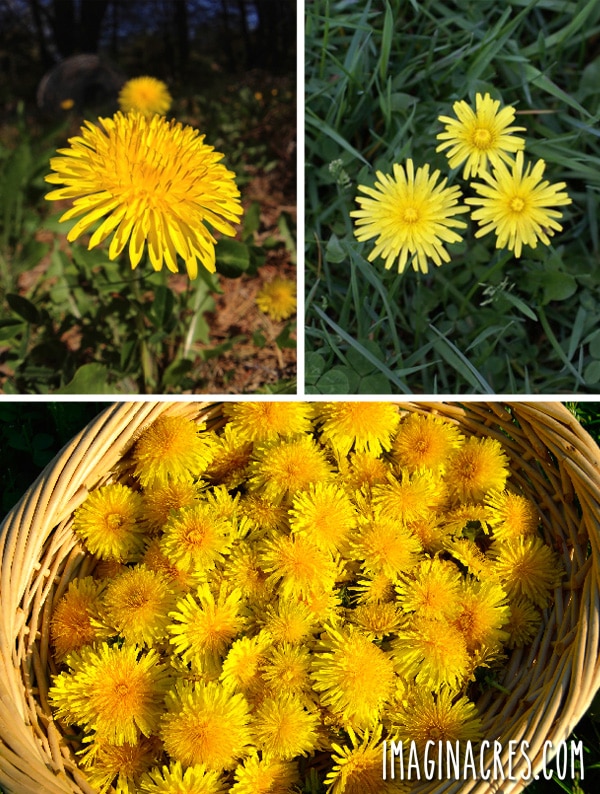
Where to find dandelions: Lawns, sunny clearings, and gardens.
Edible parts: Leaves, flowers, roots
How to use it:
- Young leaves are great in salads or sautéed like spinach. Harvest leaves early in spring before they become too bitter.
- The yellow petals can be used to make jelly, tea, or even wine.
- Roots can be dried and roasted for a caffeine-free coffee substitute.
Dandelion Recipes:
Wild Violets
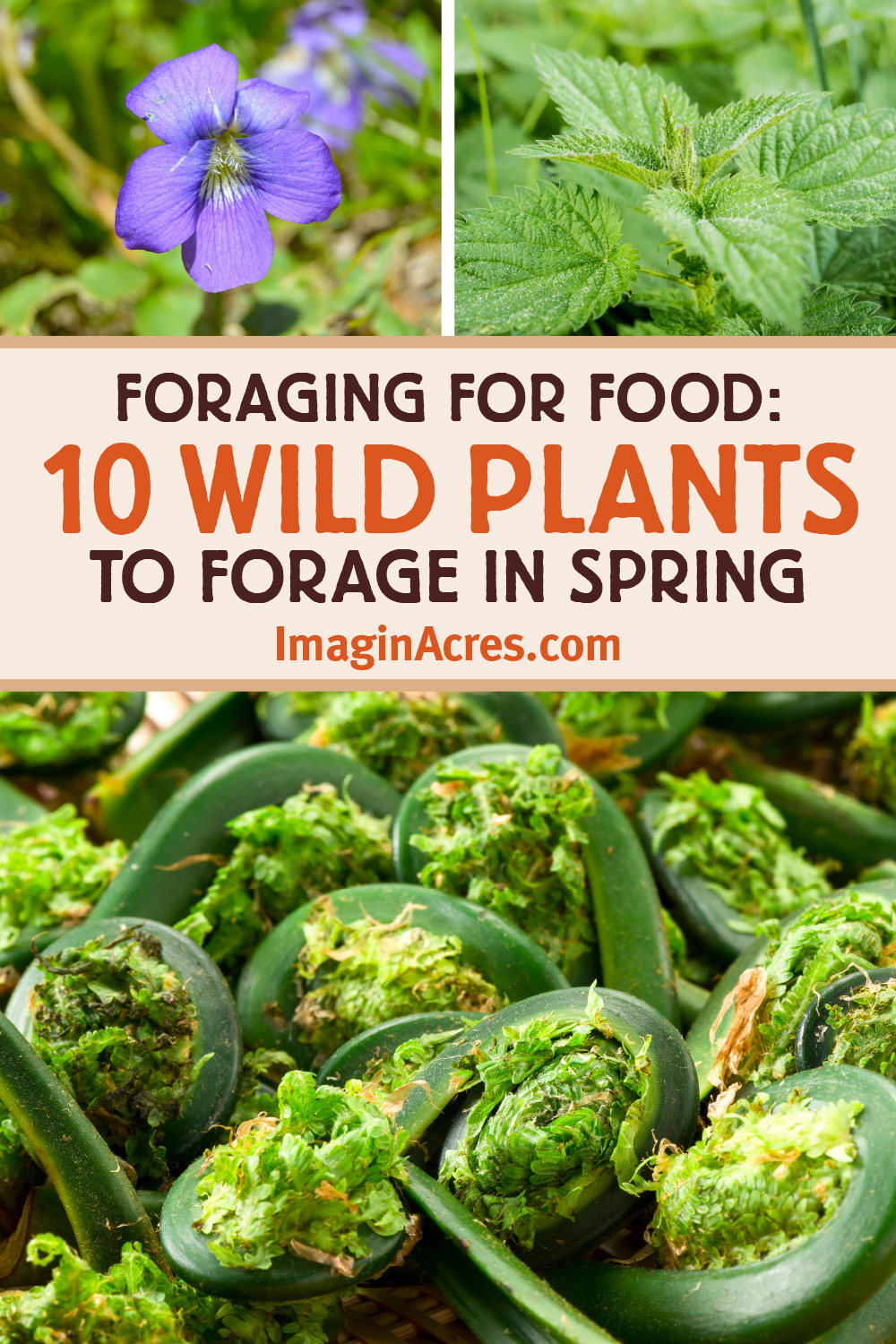
Blue wild violets (Viola sororia) are prominent in the late spring, showing their lovely purple faces all throughout our yard and woods. We found huge patches of wild violets growing down alongside the creek bed. We’ll be using these gorgeous flowers for some violet infused vinegar for tasty salad dressings!

Where to find it: Woodlands, lawns, shady garden edges. Look for the classic purple, white, or blue blooms carpeting shady spots in spring.
Edible parts: Leaves and flowers
How to use it:
- The heart-shaped leaves are great in salads or cooked with other greens.
- The flowers make a lovely garnish and can also be infused with vinegar or turned into violet syrup.
Wild Violet Recipes:
Chickweed
Chickweed (Stellaria media) is one of those delightful little greens that shows up early in the season when you’re craving something fresh. It grows in delicate mats, with small, star-shaped white flowers and tender, bright green leaves.
I don’t have to look far to find chickweed. It grows abundantly in my herb and vegetable gardens and needs to be weeded frequently. Luckily, it is tasty.
Chickweed is easy to harvest, just pinch the upper parts of the plant, and it’ll keep growing. I like to snip it with scissors and use it fresh in salads or pile it onto sandwiches like sprouts. It’s also lovely in pestos, smoothies, or gently wilted in a stir-fry. This tender plant grows in generous patches, so feel free to harvest by the handful!
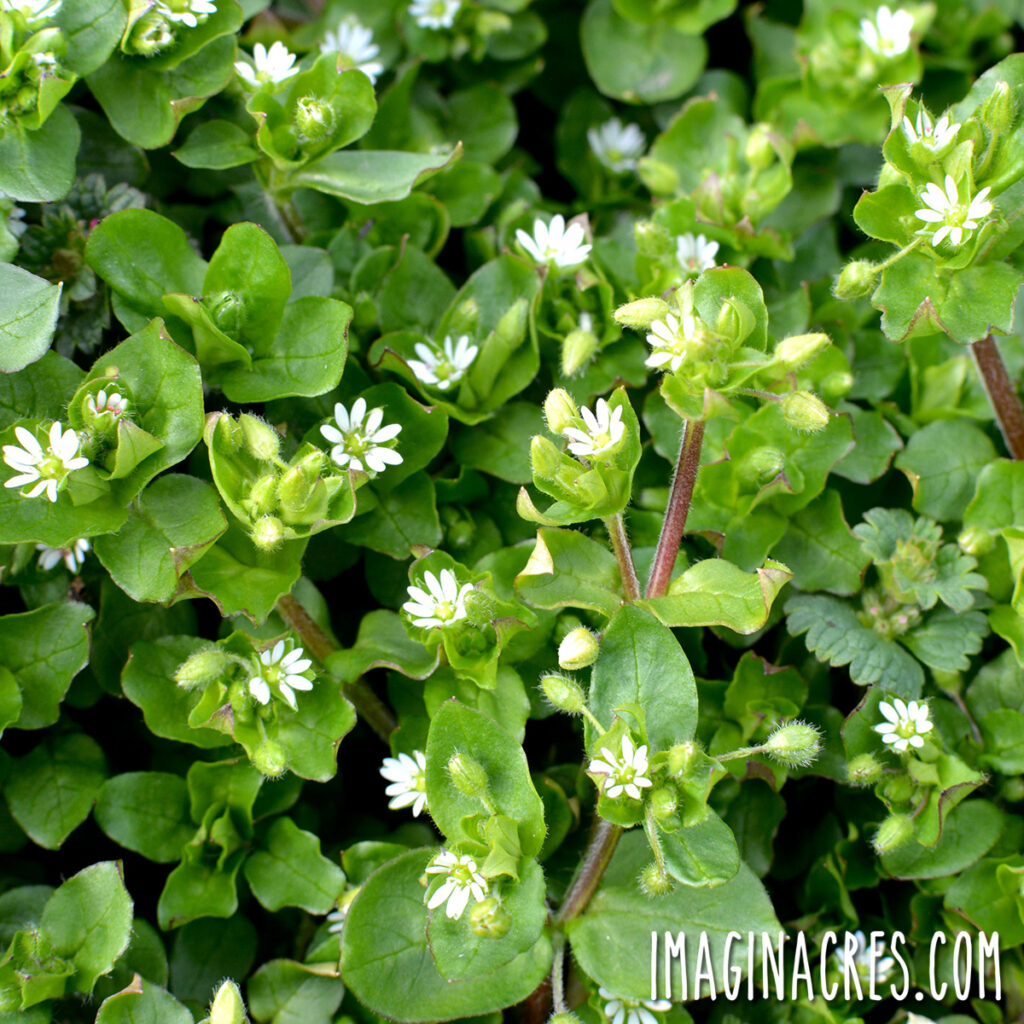
Where to find it: Garden beds, lawns, forest edges, and moist, disturbed ground
Edible parts: Leaves, stems, and flowers
How to use it: Best eaten raw or lightly cooked.
- Enjoy raw in salads
- Add to your green smoothies.
- Lightly cook like spinach for a mild, earthy flavor.
Stinging Nettle
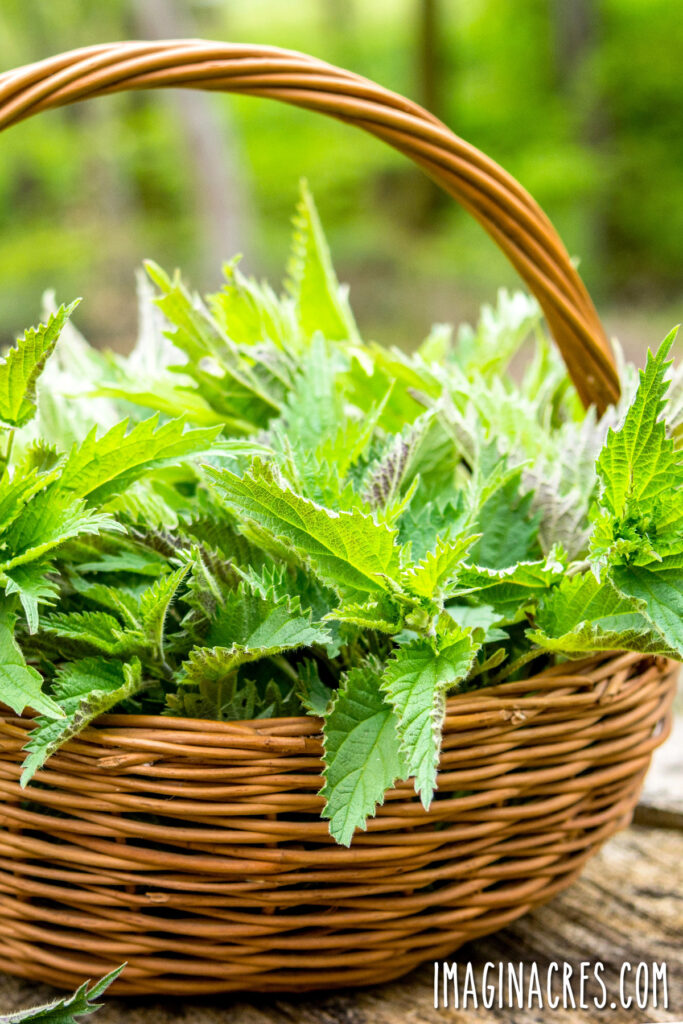
Stinging nettle (Urtica dioica) doesn’t sound like something you’d want to forage for. Instead, it sounds like something you’d like to keep far away from! Nettle is actually one of the best things to find while spring foraging. Stinging nettle needs to be collected carefully so it doesn’t sting you. Wear gloves when harvesting and use tongs to handle before cooking.
I use gloves to hold each stem, then cut it about halfway up from the ground, carefully strip off the leaves, and place them in my basket. We use our dehydrator to dry the leaves for nettle tea. There are tons of other uses for this amazing and abundant plant, check them out below!

Where to find it: Woodland edges, near swamps, and disturbed soils.
Edible parts: Young leaves (before flowering)
How to use it: Once cooked or dried, nettle loses its sting and can be used in soups, teas, or as a spinach substitute.
Stinging Nettle Recipes:
Ramps or Wild Leeks
Wild ramps (Allium tricoccum), also called wild leeks, wild garlic, or wild scallions, are far and away the stinkiest vegetable I’ve ever encountered. I’ll give you fair warning: if you’re going to harvest ramps, be sure it’s on a day that you can open the windows and air out your kitchen because it’s going to stink to high heaven.
We’re extremely lucky to have an abundance of ramps growing on our property. In the springtime, you can’t step more than two feet without encountering a patch of them.
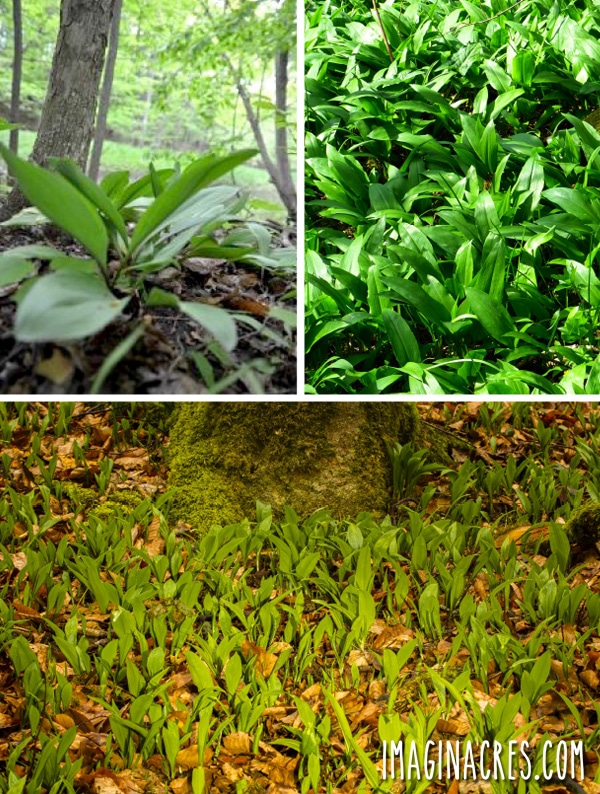
Where to find it: Open woods, lawns, and fields. Crushed leaves should smell strongly of garlic or onion. If not, skip it, as there are toxic look-alikes.
Edible parts: Leaves, bulbs, flowers
How to use it: Use like chives or scallions. Snip into eggs, soups, or stir-fries. Wild garlic leaves make a tasty pesto!
Ramps or Wild Leek Recipes:
Purple Dead Nettle
Despite the name, purple dead nettle (Lamium purpureum) is not related to stinging nettle, and it won’t sting you! It’s a cheerful little plant with fuzzy, heart-shaped leaves and tiny purple flowers. You’ll often find it blooming early in the spring, sometimes even before the snow has melted.
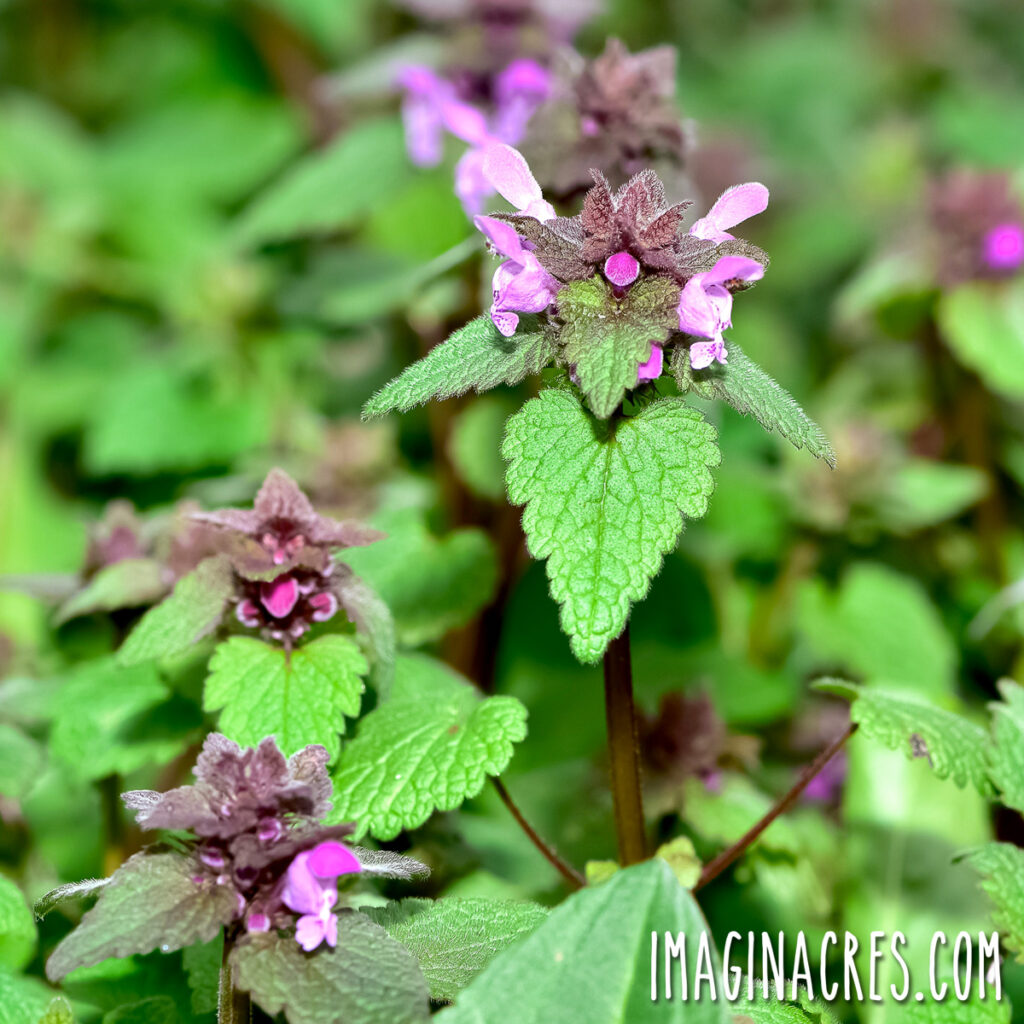
This member of the mint family is edible and mild, though a little fuzzy when raw. I like to mix it with other greens in soups or blend it into pestos. The flowers make a pretty edible garnish too. Plus, it’s a great early nectar source for pollinators, so be sure to leave some behind!
- Where to find it: Lawns, garden beds, disturbed soil, and sunny open areas
- Edible parts: Leaves, stems, flowers
- How to use it: Best used raw in smoothies or pestos, or cooked lightly in soups and sautés
Wild Chives
Wild chives (Allium schoenoprasum) are native to North America and are closely related to cultivated chives, which are commonly spread by seed. This close relationship makes it challenging to distinguish between the two. Both types of chives are edible and can be used in similar ways.
Whenever springtime rolls around on our woodland homestead, my husband and I like to exclaim, “The chive crop is coming in!” Wild chives grow in thick clumps in our woods. Their abundance is astounding. In the springtime, we add them to everything imaginable, and this year, we will also preserve some to use throughout the year.

Where to find it: Clumps of wild chives can be found along rivers, streams, and meadows, while the escaped cultivated chives often spring up in gardens, woodland edges, and fields. The leaves are hollow and have a mild onion fragrance when crushed.
Edible parts: Leaves, roots, and blossoms.
How to use it: The leaves and roots can be chopped and added to salads, soups, and dips. The flowers are also edible and can be added to salads or used as a garnish.
Wild Chive Recipes:
Fiddleheads
One of our favorite spring foraging delicacies to emerge in New England is the ostrich fern fiddlehead (Matteuccia struthiopteris). We found numerous spots on our property that we have been harvesting for years.
Fiddlehead ferns tend to emerge and grow rapidly, and they need to be harvested before they begin to unfurl into fern foliage. There is a very short harvest window for fiddleheads. So we check the patches frequently in early spring so we don’t miss out.
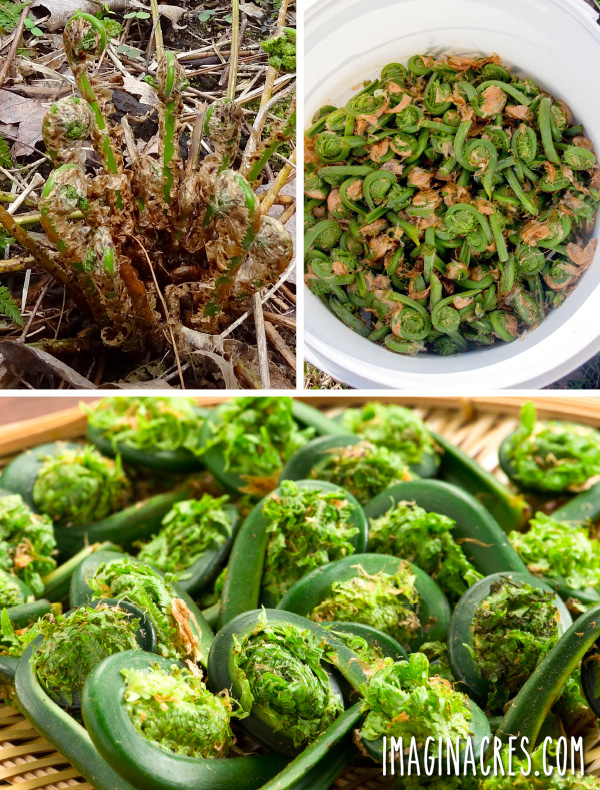
Fiddleheads have an earthy, green flavor, sometimes described as a combination of asparagus, spinach, and mushrooms.
Only harvest from ostrich ferns, other ferns may be toxic. Look for a smooth, deep green coil with a U-shaped stem groove. Check out these tips for identifying ostrich fern fiddleheads.
- Where to find it: Near rivers, streams, marshes, and moist woodlands
- Edible parts: Coiled young shoots
- How to use it: Must be cooked: Steam or sauté with butter and garlic for a springtime treat, or pickle it for later.
Fiddlehead Recipes:
Wild Mustard
I can’t talk about spring foraging without bringing up wild mustard. Garlic mustard (Alliaria petiolata) is a non-native biennial herb brought to the U.S. in the 1800s as an edible plant. It’s now widespread across much of the Northern United States and Canada and is considered a serious invasive species. It grows in woodlands, along trails, and even in shaded forests where it outcompetes native plants and wildflowers.
Go ahead and harvest as much as you’d like by pulling it out from the roots, trimming off what you need, and then destroying the rest of the plant (even pulled plants can flower and form seeds). You can either burn the plant or place it in black trash bags in the sun before sending it to the landfill.
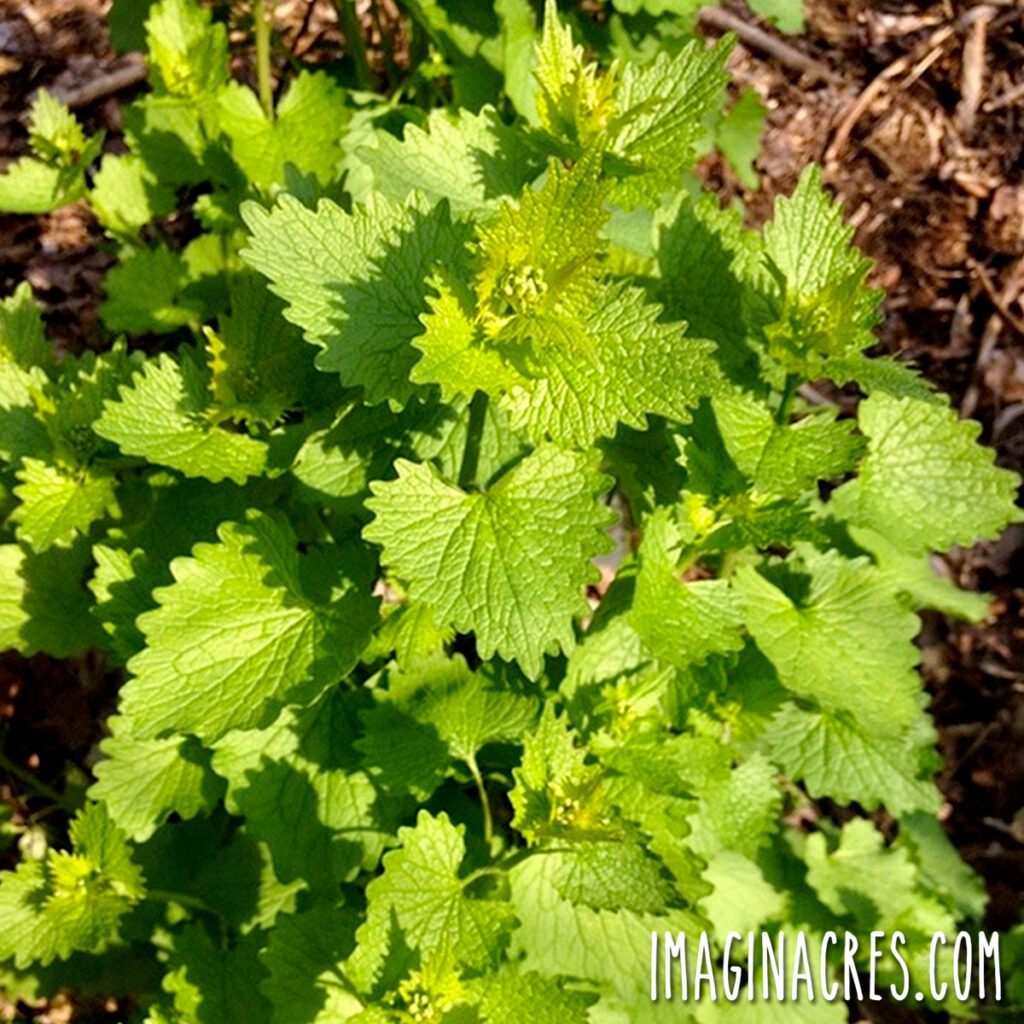
Where to find it: Forest edges, trails, disturbed soil
Edible parts: Leaves, stems, and flowers
How to use it:
- The bitter garlicky leaves are tasty in pesto or sautéed with other greens.
- The flowers have a spicy flavor and can be sprinkled over salads.
- The stems are the best part in my opinion, you can chop and add these to salads, or sautee in butter.
Garlic Mustard Recipes:
Cleavers
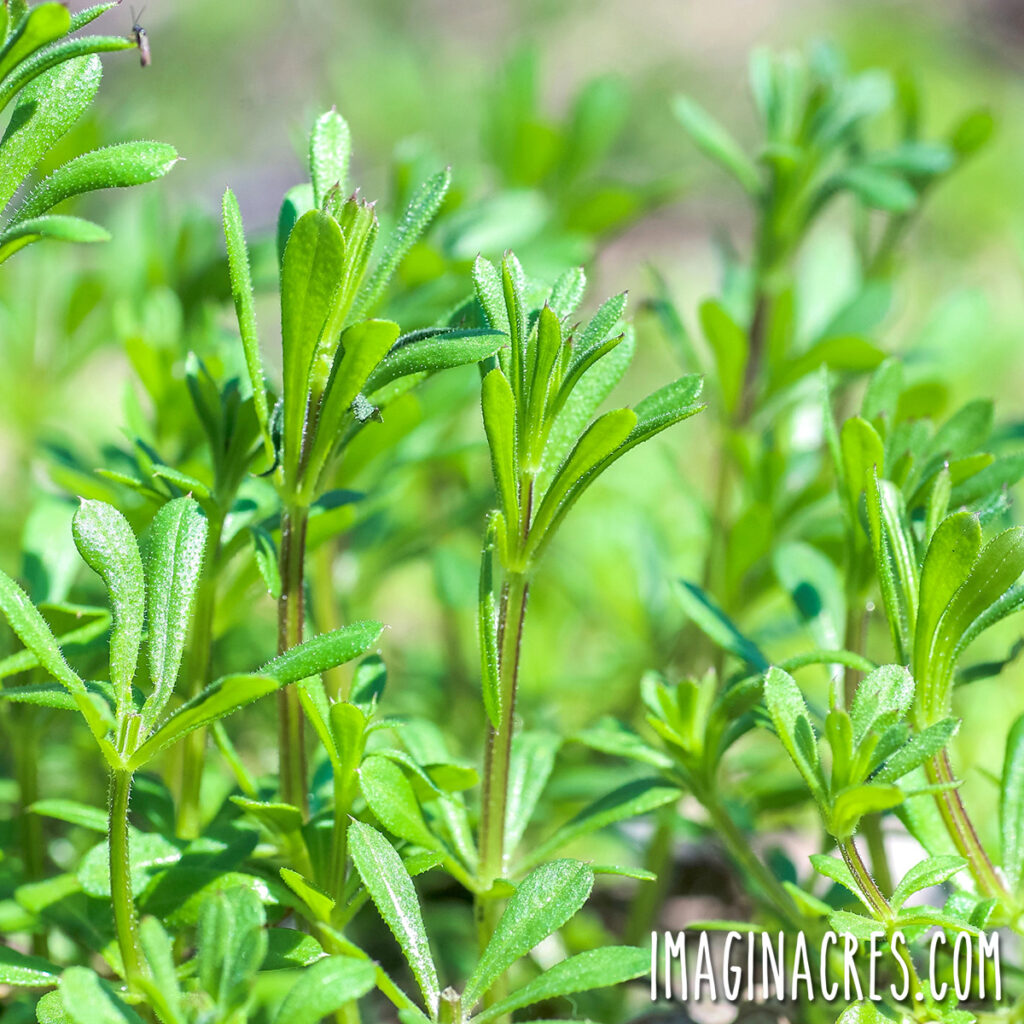
Cleavers (Galium aparine), also known as sticky weed or velcro plant, is the one that clings to your clothes when you brush past it. It has long, straggly stems and tiny hook-like hairs that give it that clingy feel.
When harvesting, wear gloves or pick the younger, more tender shoots. It’s best used fresh in a nourishing herbal infusion or juiced with other greens. You can also dry it for tea later in the season.
- Where to find it: Along fences, hedgerows, moist woods, and shaded areas
- Edible parts: Tender young stems, leaves
- How to use it: Used mostly in teas or infusions; can also be juiced with other spring greens
Spring Foraging in the Woods
Spring is a magical time to reconnect with nature, and foraging is a beautiful way to slow down, explore your surroundings, and discover the edible treasures growing right under your feet. Whether you are gathering dandelion greens for a fresh salad or learning to identify fiddleheads near the creek, each outing deepens your connection to the land and the seasons.
Remember: there’s no need to rush. Take your time, savor the experience, and celebrate each new plant you learn. The woods are full of wonder, and the more you look, the more you’ll find.
I hope you all are taking the time to go for walks in the woods. Please let me know what you find! I always love to hear from readers about your foraging adventures!
My Favorite Foraging Resources:
- The Peterson Field Guide to Edible Wild Plants by Lee Allen Peterson is an excellent plant ID guide with helpful illustrations.
- Northeast Foraging by Leda Meredith: Great for your region if you’re in the Eastern U.S.; focuses on safe, sustainable harvesting.
- The Forager’s Harvest by Samuel Thayer: A thorough and engaging read for learning how to harvest and prepare wild foods.
-
The Herbal Academy’s Foraging Course: Whether you’re just starting out or want to refine your skills, The Herbal Academy’s Foraging Course is a fantastic way to grow your wild food knowledge. It covers plant ID, ethical harvesting, and seasonal foraging strategies—all with gorgeous visuals and expert insight.
Note: This article was originally published on May 2, 2018, and has been updated on May 22, 2025, with fresh information and even more spring crops to forage. Looking for more foraging inspiration? You may also enjoy these related posts:
- Beginners Guide to Foraging for Food Safely
- Summer Foraging Guide: 8 Wild Edible Plants to Find in Summer
- Guide to Summer Foraging: 8 Wild Fruits and Berries to Forage in Summer
- Urban Foraging Guide: How to Find Free Wild Food in the City



Lovely article! I always forget what ramps look like – thank you for the reminder. Now I’m hungry. 😉
Thank you Tessa!!