Chicken Manure Compost: How to Safely Turn Coop Waste into Garden Fertilizer
Want healthier soil and bigger harvests? Learn how to turn chicken manure and bedding into nutrient-rich compost for your vegetable garden. Safe, simple tips for making chicken manure compost at home.
If you raise backyard chickens, you know that fresh eggs come with a generous side of coop cleanup. Luckily, all that chicken manure and used bedding doesn’t have to go to waste. You can turn it into chicken manure compost, a rich, natural fertilizer for your garden.
We already covered the basics of composting in this post, but composting chicken manure deserves its own spotlight. With just a little care and time, you can safely turn your coop clean-outs into a valuable soil amendment your vegetable garden will love.
Why Compost Chicken Manure?
Poultry manure is considered one of the best manures for the garden thanks to its high levels of nitrogen, phosphorus, and potassium, all essential nutrients for healthy plant growth. But in its raw form, it’s what gardeners call “hot.” That means it’s too strong to apply directly to your garden beds and can actually burn your plant’s roots if used fresh.
Raw chicken litter may also contain harmful pathogens like salmonella, especially if your chickens have access to rodent or wild bird activity in the yard. Applying it without proper treatment can pose a risk to your plants, soil health, and food safety.
That’s where composting chicken manure comes in.
When chicken manure is combined with carbon-rich materials, such as bedding, and allowed to break down through decomposition, it transforms from a potent waste product into a valuable, safe, and well-balanced chicken manure fertilizer.
Composting neutralizes harsh ammonia, kills off harmful bacteria, and stabilizes nutrients so they’re available when plants need them most.
But the benefits of compost go beyond nutrients.
Finished compost helps improve your soil’s structure, making it lighter, more crumbly, and better able to hold moisture without becoming waterlogged. It improves aeration and drainage, particularly in heavy clay soils, while adding organic matter that encourages the growth of healthy soil microbes. These tiny living organisms drive nutrient cycling and support root health.
Whether you’re growing vegetables, fruit trees, or tending flower beds, adding well-aged chicken manure compost to your soil is one of the best things you can do to build fertility naturally and support strong, resilient plants.

My Chicken Compost Routine
I do two deep cleans of the chicken coop each year. Once in late fall to get ready for the cold months ahead, and again in spring to freshen things up for the start of egg-laying season.
Inside the coop, I use wood shavings as bedding. During a deep clean, I sweep everything out, shavings, droppings, feathers, and all, and load it into a wheelbarrow. From there, it goes straight into one of our outdoor compost bins to break down over time.
Between those big clean-outs, I maintain the coop by scooping the droppings board (I call it the “poop deck”) that sits beneath the roosts. I top it off with fresh shavings as needed to keep things tidy and reduce odors. Those small batches of manure and bedding also get added to the compost bin throughout the year. The full mix of chicken manure and bedding then sits for at least a year before I use it in the garden. I turn it when I think of it, no strict schedule!

What Can You Compost from the Coop?
When cleaning out your chicken coop, you can safely add the following materials to your compost pile:
- Chicken manure/poop
- Used bedding like pine shavings, straw, hay, or shredded leaves
- Feathers
- Nesting box materials, such as shredded paper or straw
These materials create a balanced mix of carbon (“browns”) and nitrogen (“greens”), ideal for composting chicken manure and bedding. I use pine shavings in my coop, and during our seasonal deep cleans, everything (shavings, droppings, feathers) gets swept into a wheelbarrow and added to our compost pile. It’s simple, natural, and breaks down beautifully over time.
If you use the deep litter method in the winter, your bedding will already be partially broken down by the time you clean it out come spring. This method can give your compost pile a head start by introducing beneficial microbes and reducing the time needed for full decomposition.

A Quick Note About Bedding Additives and Alternatives
Not all bedding materials are compost-friendly:
- Avoid using scented or chemically treated shavings, as they may contain substances that can harm soil life.
- Sweet PDZ, a zeolite-based product often used to control ammonia and odor, doesn’t break down in compost. While not harmful in small amounts, it can accumulate in garden soil over time. If you use it regularly, consider composting that manure separately or skipping it in compost destined for vegetable beds.
- Pelletized bedding (like wood stove or horse stall pellets) is usually safe if untreated. Just be sure to check labels for additives or binders before composting.
Why I Don’t Use Sand in the Coop
Some chicken keepers use sand in the coop as an alternative to traditional bedding, especially for ease of scooping and odor control. We tried this in our coop, but it didn’t work for us. The sand trapped moisture, making the coop damp and harder to manage.
More importantly, sand doesn’t break down. It adds no organic matter to the compost pile. That meant we were missing the essential “browns” needed to balance the chicken manure compost.
For composting purposes, I’ve found that natural materials like pine shavings, chopped straw, and dried leaves do a much better job. They absorb moisture, control odor, and break down beautifully into rich, garden-ready compost.
How to Compost Chicken Manure
The key to creating great chicken manure compost is balancing the ratio of carbon to nitrogen. Manure adds nitrogen, while bedding like pine shavings contributes carbon. Aim for a carbon-to-nitrogen ratio around 30:1.
If you use a good amount of bedding in your coop (like I do), you’re likely already close to the ideal ratio. If your compost pile smells too strong or seems too wet, toss in more browns, like shredded leaves, straw, or cardboard.
Method 1: Slow Composting (What I Do)
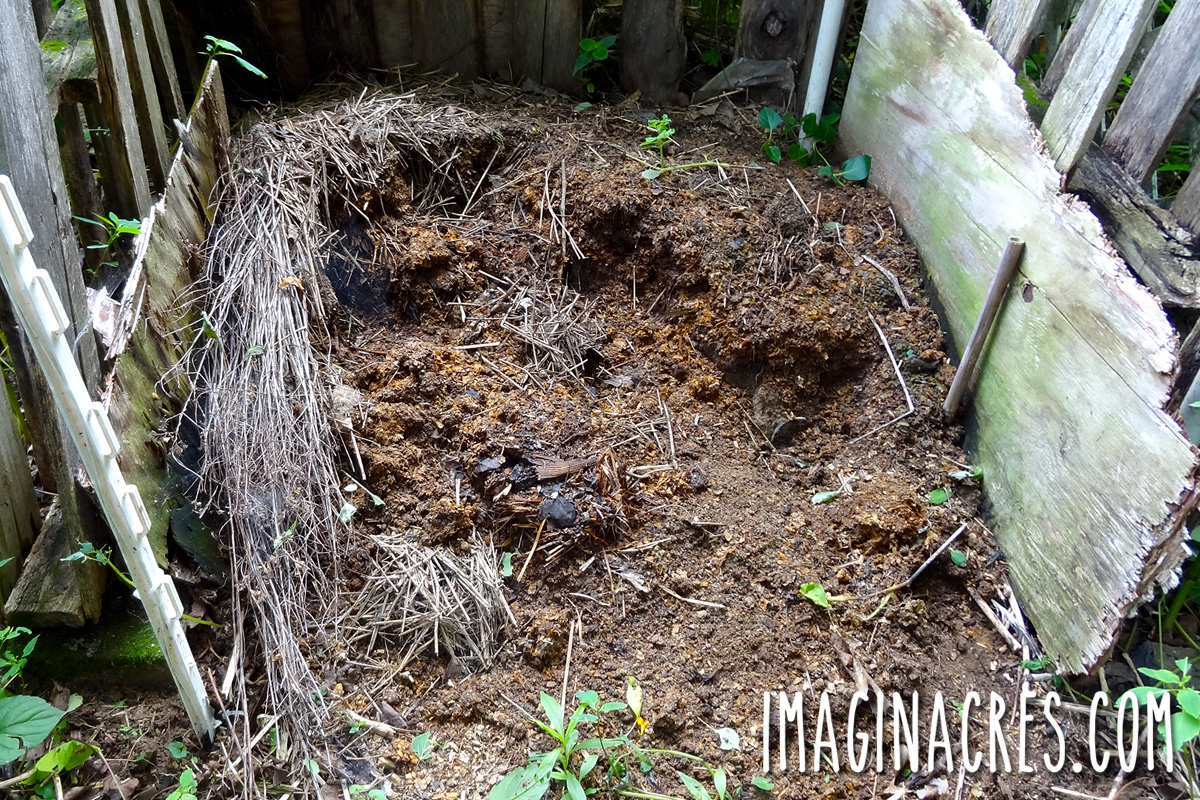
After each deep clean, I add the manure and bedding mixture to a dedicated compost bin. I don’t follow any formal composting method, no thermometers, no scheduled turning. I simply let the pile sit and break down over time. Whenever I think of it, I grab a pitchfork and give it a good mix.
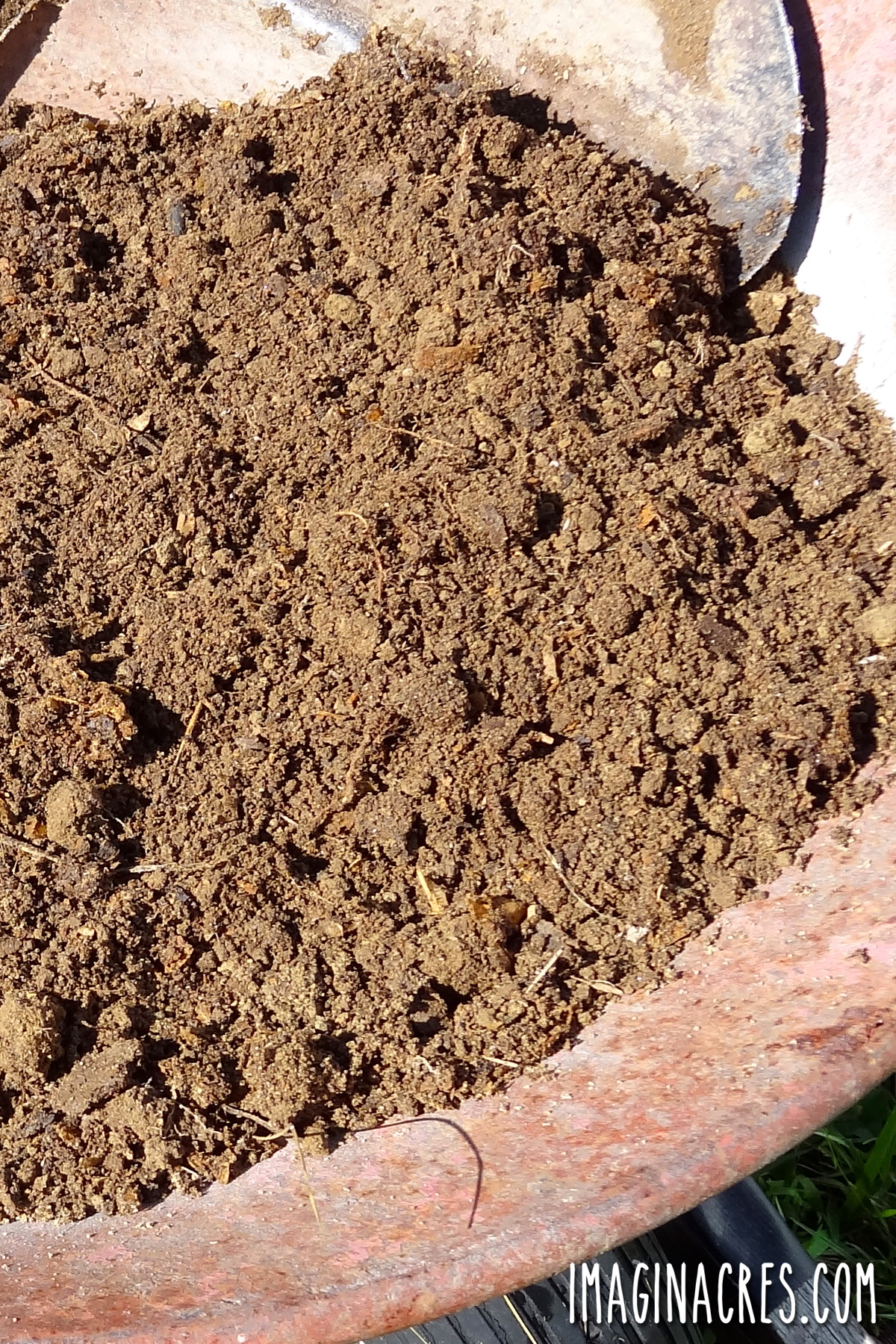
Since I’m not actively managing it for heat, I let the compost age for at least a year before using it in the garden. By the time I’m ready to use it, the composted chicken manure is dark, crumbly, and rich in earthy aromas. At this point, it is safe and nutrient-rich, with no pine shavings and no ammonia scent, just rich, garden-gold soil. Perfect for enriching garden beds.
Method 2: Hot Composting
If you want your compost to break down faster, you can manage it more actively using the hot composting method:
- Build a pile that’s at least 3x3x3 feet in size.
- Layer manure and bedding with other garden waste to improve airflow.
- Keep the pile moist, like a wrung-out sponge.
- Turn it regularly to keep oxygen flowing. Once a week or so.
- Monitor the temperature. You want it to hit 131–160°F to kill pathogens and weed seeds.
Even if you’re not aiming for a fast turnaround, turning your pile occasionally will still help speed things up.
How Long Should You Compost Chicken Manure?
If you’re managing a hot pile, it can be ready in as little as 2–3 months. But for the rest of us, a good rule of thumb is 6 months to a year. I prefer to let mine sit for a full year before using it in the garden. That gives the pile time to fully decompose and mellow out, ensuring it’s safe for plants and soil life alike.
Using Finished Chicken Manure Compost
Once your compost is dark and crumbly, you can use it just like any other finished compost:
- Mix into garden beds in spring or fall.
- Top-dress around tomatoes, peppers, and cucumbers for an extra boost of nutrients.
- Add to containers or raised beds to boost soil fertility.
- Avoid using it for seed starting or delicate seedlings. It’s still quite rich!

Frequently Asked Questions About Composting Chicken Manure
These are some of the most common questions I see come up again and again on backyard chicken forums, Facebook groups, and among fellow chicken keepers about how to turn coop waste into safe, garden-ready compost:
How long does chicken manure need to compost? Chicken manure should be composted for at least 6 months, but a full year is even better. This gives it time to break down fully and become safe for garden use.
Can you compost chicken poop without bedding? Yes, but it’s best to mix it with high-carbon materials, such as pine shavings, straw, or dried leaves. Composting chicken manure without enough carbon can lead to odor and imbalance in your pile.
How to compost chicken bedding? Used bedding, like pine shavings or straw, is considered a “brown” material. It should be mixed with chicken manure and other greens in your compost pile to create a balanced carbon-to-nitrogen ratio.
How long to compost chicken manure before using it in the garden? I like to give it 6 to 12 months, depending on how actively you manage your pile. A longer composting period ensures the manure is mellow, safe, and no longer “hot.”
What nutrients are in chicken manure compost? Composted chicken manure is a balanced, organic fertilizer with a typical N-P-K ratio of around 1.1-0.8-0.5. These values can vary depending on factors like the type of bedding used and how thoroughly the compost has decomposed, but overall, it’s a rich source of nitrogen with modest amounts of phosphorus and potassium, which is perfect for supporting healthy plant growth.
How to use fresh chicken manure in the garden? It’s not recommended. Fresh chicken manure can burn plants and may contain harmful pathogens. Always compost it thoroughly before applying to garden beds. The only time I use fresh poultry litter in the garden is when enriching an empty garden bed for the following year. I will add a layer and let it decompose over winter or at least 6 months, then work it in at planting time.
What’s the best chicken compost system for a small flock? For most backyard chicken keepers, a simple two-bin system or compost pile near the coop works great. One bin holds fresh coop cleanouts, while the other contains finished compost ready for use.
From Coop to Garden
Composting chicken manure might sound intimidating at first, but it’s a natural part of the chicken-keeping cycle. With every coop clean-out, you’re creating the foundation for future growth in your vegetable garden. With just a little patience and the materials from your coop, you can create a safe, nutrient-dense chicken manure fertilizer that enriches your soil and closes the loop on your homestead.
Your chickens feed your garden, and your garden feeds you. It’s one more way that chickens help you cultivate a self-sufficient life.
You May Also Like:
- Cultivating a Chicken Garden: A Guide to Growing Crops for Your Flock
- Tips for Caring for Aging Hens
- How to Train Chickens to Come When Called