
How to Get Rid of Rats in Your Chicken Coop (and Keep Them Out)
Rats in the chicken coop? Learn how to get rid of rats, protect your flock, and rat-proof your coop with practical tips that actually work, plus what to avoid.

Rats are an unfortunate reality in most urban and suburban areas. And if you keep chickens, chances are you’ll cross paths with them sooner or later. Backyard chickens offer everything a rat could want: food, water, and cozy shelter.
When we brought home our first flock, we did everything we could to prepare. We read the books, built a secure coop, and felt ready for anything. Or so we thought. What we didn’t expect was a rat invasion.
We didn’t know it at the time, but our chicken coop had become a magnet for rodents. And while one rat might not seem like a big deal, it doesn’t take long for a small problem to grow into a full-blown infestation. Rats don’t just steal feed, they spread disease, dig tunnels, prey on young chicks, and can even injure adult birds.
We tried just about everything to get rid of them. Some things worked. Others… not so much. In this article, we’re sharing what finally helped us kick rats out of our coop for good and keep them from returning.
The Unwelcome Visitors
It started with a strange rustling just after dusk. At first, I thought it was the wind rattling the metal feed bin. But when I looked closer, I saw something dart out from beneath the coop, a blur of fur and a long tail disappearing into the shadows.
We saw the first rat around our coop about a week after we moved our teenaged birds into it.
That was the first rat.
Over the next few days, the signs became impossible to ignore. Droppings near the feeder. Missing eggs. My chickens were jumpy, especially at night, and something was clearly off. Then we discovered tunnels had been dug right underneath our fencing and into the chicken run, where we kept an endless supply of delightful chicken feed for them to feast on, and boy, were they feasting.
As much as I loved my little urban homestead, I realized I was now dealing with a rat invasion.
If you’re here, you may be in the same situation, wondering how to get rid of rats in your chicken coop, how they got there in the first place, and how to make sure they never come back. Rats can do serious damage, from eating feed and eggs to spreading disease and even harming baby chickens.
In this article, we’ll walk through how to spot a rat problem, eliminate it safely, and rat-proof your chicken coop for good using effective solutions that won’t put your flock at risk.
Do Chickens Attract Rats?
Let’s get this one out of the way first: chickens don’t actually attract rats, at least not by themselves.
Rats aren’t interested in your flock because of their charming personalities or fancy feathers. What really draws them in is the easy access to food, water, and cozy hiding spots. In other words, a well-stocked chicken coop can look like an all-inclusive resort to a rat.
Back when we first brought chickens into our backyard, we had no idea how appealing their setup would be to unwelcome guests. We thought we were doing everything right: giving them plenty of space, feeding them on a schedule, and tucking them in at night. But we made one big mistake: we left feed out overnight.
It didn’t take long for the word to get out in the rodent world. A spilled scoop of grain here, a few crumbs near the feeder there, it was like laying out a buffet. And once the rats arrived, they made themselves right at home, burrowing under the coop and even nesting in the compost pile we had too close to the run.
The truth is that chickens don’t attract rats. We do, by accident, when we make food and shelter easy to access. The good news? That means there’s a lot you can do to prevent and get rid of rats, starting with some simple changes to how you manage your coop.

Are Rats Dangerous to Chickens?
When we first spotted a rat near the coop, I wasn’t thrilled, but I also wasn’t overly concerned. After all, I figured the chickens were bigger, louder, and not exactly pushovers. Surely, they could hold their own, right?
Well, I was wrong.
Rats may seem small, but they can cause serious problems in and around your chicken coop. They’re not just stealing a little feed here and there. They’re contaminating food and water with droppings and urine, spreading disease, and, in some cases, attacking vulnerable birds. Unfortunately, we lost baby chicks to rats, and found hens with mysterious wounds after a night of rat activity.
Here’s what rats can do once they’ve settled in:
- Steal feed and eggs: Rats are opportunists and will happily help themselves to whatever food they can carry off.
- Injure or kill chicks: Young birds are especially vulnerable. Rats can snatch sleeping chicks or pullets right off the roost.
- Chew through materials: Wood, insulation, chicken wire, nothing’s safe from a rat’s sharp teeth.
- Tunnel and nest: They’ll dig under your coop, build nests in dark corners, and even move into your compost bin.
- Spread disease: Rats carry parasites like fleas, lice, and mites, as well as pathogens like salmonella, leptospirosis, and other nasty diseases that can be transferred to your flock.
Once rats show up, they rarely leave on their own. Like most pests, if they find what they need to survive: food, water, and shelter, they’ll stay. That’s why it’s so important to act quickly to get rid of them and make your chicken coop a place they don’t want to return to.
Signs You Have Rats in the Chicken Coop
Sometimes the signs are obvious, like catching a rat red-handed, scampering across the yard. But often, it’s the subtle clues that give them away. Rats are sneaky, nocturnal creatures who usually do their dirty work after dark. You might not see them at first, but if you know what to look for, the evidence starts to pile up.
Here are some of the most common signs you’ve got rats in or around your chicken coop:
- Small droppings: Rat poop is about the size and shape of a raisin, about 1/2 to 3/4 inches long, dark, shiny when fresh, and often found near feeders, along walls, or in corners.
- Burrow holes or tunnels: Check around the base of your coop and run. Rats dig neat little holes about 2 to 4 inches wide, often with a worn path leading to them.
- Gnaw marks: Rats chew constantly to keep their teeth in check. You might find gnawed corners on wood, holes chewed into feed bags, or even bite marks on coop fencing.
- Missing or cracked eggs: If you notice fewer eggs than usual or find broken shells in strange places, rats could be to blame.
- Disturbed bedding or nesting material: Rats sometimes steal straw or feathers to line their nests, especially if tunneling nearby.
- Noises at night: If you’re close enough to hear it, listen for scratching, squeaking, or rustling after dark.
- Startled or nervous chickens: Your flock might act jumpy or unsettled, especially at night. Chickens can sense when something isn’t right.
Back when we were dealing with an infestation, it felt like we were playing detective. Every morning, we’d find more evidence: new droppings near the feeder, bedding missing near the back wall, or a suspicious tunnel leading under the pen. By the time we confirmed what was happening, the rats had already settled in.
If you spot more than one of these signs, it’s time to take action. The sooner you deal with a rat problem, the easier it is to get under control.
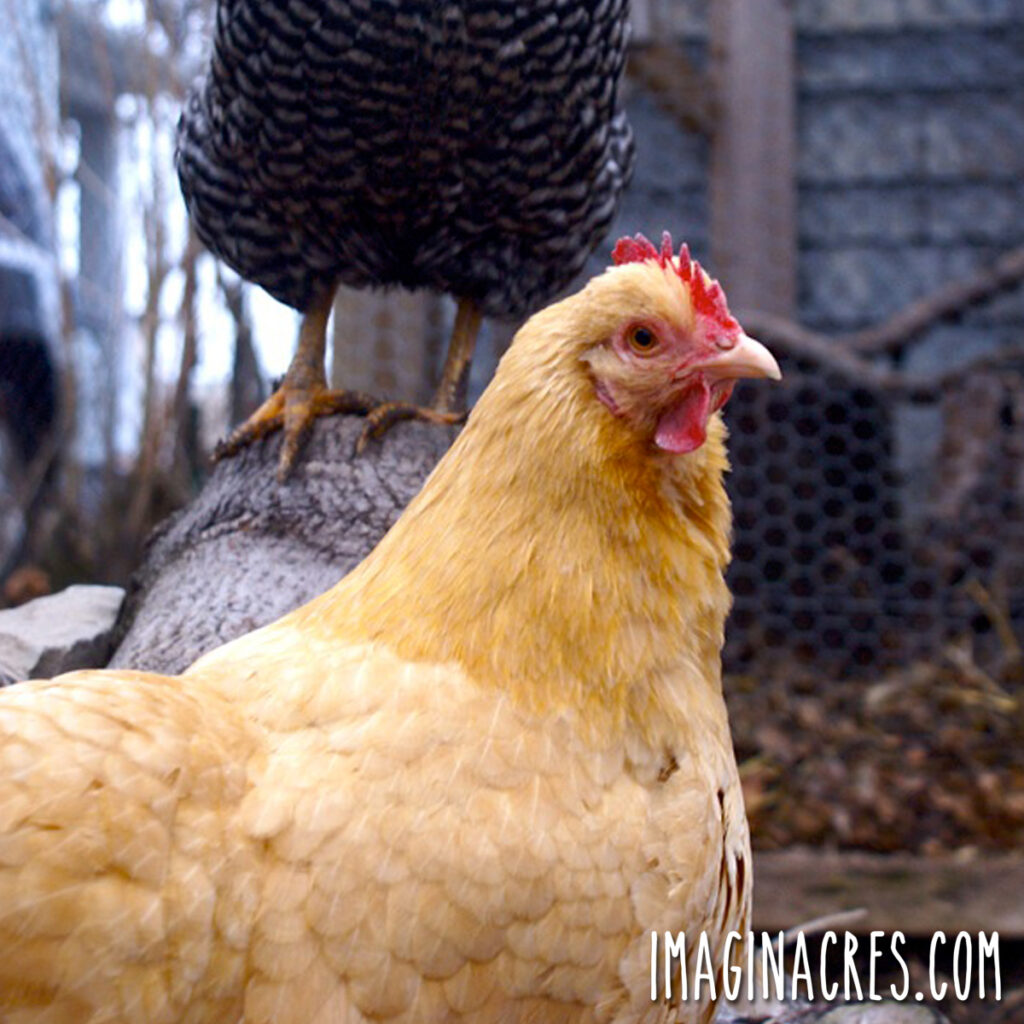
Preventing Rats in the Chicken Coop
If you’ve confirmed that rats have moved into your coop, don’t panic, but don’t wait, either. A few rats can quickly become a full-blown infestation if they find enough food, water, and shelter. The key is to act fast, stay consistent, and approach the problem from several angles at once.
I will walk through a three-part strategy that’s worked for us and many other chicken keepers: Sanitation, Exclusion, and Elimination.
Safety first: When dealing with rat traps, droppings, or tunnels, always wear gloves and consider wearing a mask when cleaning up contaminated areas. Rats can carry bacteria, viruses, and parasites that may pose a risk to you and your flock.
Let’s get started with the first and most important step: cutting off their food supply.
Step 1 Sanitation: Clean Up Food and Shelter
When we first realized we had a rat problem, I’ll admit, we thought the traps would be the solution. But we quickly learned that you can’t trap your way out of a rat infestation if you’re still feeding them every night.
Sanitation is the first and most important step to getting rid of rats. If you take away their food and make your coop a less comfortable place to hang out, they’ll have no reason to stick around.
Here’s how to get started:
- Store feed properly: Use metal storage bins with tight-fitting lids to hold your chicken feed. Rats can chew through plastic and cardboard like it’s tissue paper. Keep the bins inside if possible, and check regularly for chew marks or droppings around the base.
- Remove food at night: If you’re free-feeding or leaving food and water out overnight, you might as well hang a “Welcome Rats” sign on your coop. Offer food and water during the day and remove it at night, or switch to a rat-proof feeder like a treadle-style model that only opens when a chicken steps on it.
- Collect eggs daily: Rats love eggs. Make sure you’re gathering them at least once a day, and watch for signs of cracking or eggs being moved from the nest. Rats will sometimes roll them to a safer spot.
- Tidy up scraps and spilled feed: Clean up any leftover food scraps and any chicken feed that gets kicked around.
- Limit cozy hiding spots: Rats look for dark, undisturbed areas to nest. Piles of lumber, old straw, unused corners of a shed, it’s all real estate to them. Do a cleanup around your coop, remove clutter, and trim back brush or tall grass.
- Remove access to compost: It wasn’t just the chicken food drawing rats to our backyard, but the open-air compost pile as well. We moved all the compost into steel garbage cans with tight-fitting lids. Rats can’t chew through steel, so that took away one food source.
By tightening up our feed routine and keeping the coop and yard cleaner overall, we saw a noticeable drop in rat activity even before we set a single trap. Make your coop less of a buffet and more of a dead end, and you’ll be well on your way to solving the problem.
Step 2 Exclusion: Seal Entry Points
Once you’ve cut off the rats’ food supply, the next step is to keep them out for good. Rats are clever, persistent, and shockingly flexible. They are able to squeeze through holes as small as a quarter. If there’s a way in, they’ll find it.
I learned this the hard way when I discovered a tunnel that started outside our fenced-in yard and ended under the chicken pen. They weren’t just passing through. They had moved in.
Luckily, when we built our coop, we included a layer of hardware cloth in the floor, windows, and air vents. However, that left our run vulnerable. We replaced our run walls with hardware cloth and instantly noticed fewer chew holes and attempts to break in.
Here’s how to rat-proof your coop and run from the ground up:
- Use hardware cloth, not chicken wire: Chicken wire keeps chickens inside but doesn’t keep predators out. They can chew through it easily with their sharp teeth. For anything that needs to be rodent-proofed, use 1/4-inch galvanized hardware cloth. It’s tough, chew-resistant, and lasts a long time.
- Seal all gaps and holes: Inspect your coop for cracks, loose boards, or gaps around windows, vents, and doors. Use metal flashing, hardware cloth, or sturdy wood panels to close up any spots larger than 1/2 inch. Don’t forget to check under the nesting boxes and corners where walls meet the floor.
- Bury hardware cloth around the run: If rats are burrowing, dig a trench around the outside of your run and bury hardware cloth at least 12 inches deep. Some keepers lay it flat in an “L” shape underground, pointing out away from the coop. So when rats dig, they hit the wire and give up.
- Raise the coop: If your coop sits directly on the ground, consider raising it up several feet to discourage anything from hiding underneath.
Rats are survivors. They’re always looking for their next safe hideout. By sealing up entry points and blocking off access to your coop and run, you make it clear: this neighborhood’s closed for business.
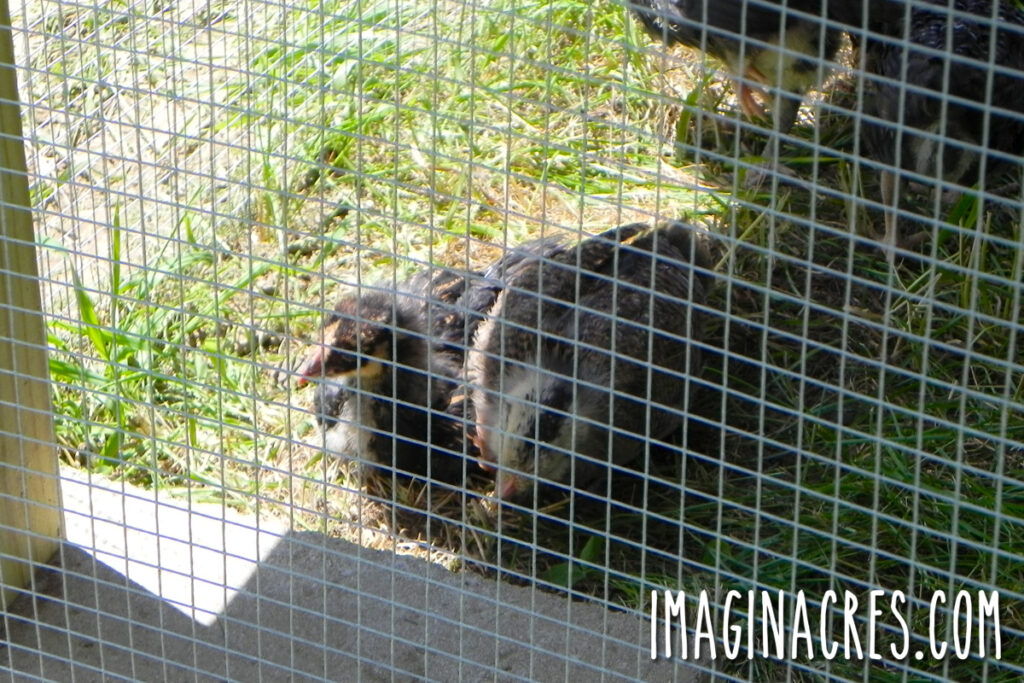
Step 3 Elimination: Trap or Repel Rats
Once you’ve cleaned up the coop and sealed off their entry points, it’s time to deal with any rats still hanging around. Unfortunately, they won’t just pack up and leave politely. They’ll stick around as long as they think they’ve got a shot.
We learned this firsthand when, even after cutting off their food supply, we still heard rustling near the coop at night. That’s when we knew we had to bring out the traps.
Here are the most effective ways to safely and humanely eliminate rats from your chicken coop:
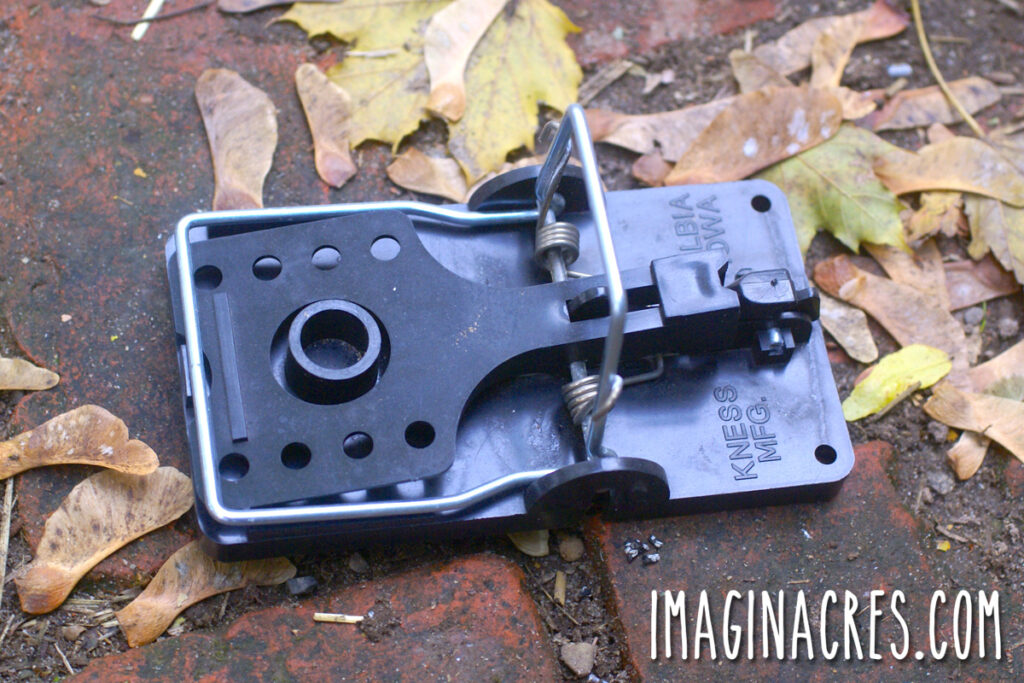
Use Snap Traps Outside the Coop
Classic snap traps are still one of the most effective tools against rats. They’re cheap, fast, and work as long as your chickens can’t get to them.
Place traps outside the coop, near burrows, run edges, or along walls where you’ve seen signs of activity. Bait them with peanut butter, sunflower seeds, or a smear of chicken feed mash. Check and reset them daily.
Set multiple traps at once for best results, and move the traps around every few days. Rats are smart, and if one disappears, the rest get suspicious.
We had the best luck placing traps in a box made of plywood with a hole small enough for a rat to enter but not a chicken or curious cat.
What Didn’t Work for Us
Over the years, we’ve tried just about every rat control method you can imagine. Some worked great. Others… not so much. Here are a few things that didn’t work for us and why we don’t recommend them:
DIY Bucket Traps
At first, these seemed like the perfect homestead solution: cheap, simple, and often praised in backyard chicken groups. But in practice? They caused more problems than they solved.
They weren’t very effective. The rats quickly learned to avoid them, or didn’t fall in as expected.
When they did work, we were left with a live rat in a bucket… and no easy option for what to do next. Relocating them isn’t really a solution. Rats are territorial and often find their way back (or become someone else’s problem). The only option was killing them in the bucket. We ended up feeling more frustrated and conflicted than relieved. We moved on to other methods.
Avoid Poisons and Sticky Traps
It’s tempting to go for the quick fix, set some bait, walk away, and let the problem “solve itself.” But we strongly discourage the use of poisons and glue traps, especially around chickens and other animals.
Here’s why:
- Chickens can accidentally ingest poison either directly or by pecking at a dying rat.
- Pets and kids are also at risk, especially if they find bait or a weakened rodent.
- Wildlife suffers too. Raptors, like owls and hawks, often die from secondary poisoning after eating a rat that consumed bait.
- Sticky traps are inhumane. They cause prolonged suffering, and non-target animals (like small birds or reptiles) can get caught unintentionally.
There are plenty of effective, safer alternatives. And while they may take a little more effort, they’re worth it for the well-being of your flock and the surrounding ecosystem.
How to Keep Rats Out of the Coop Long-Term
Once you’ve cleared out a rat infestation, the last thing you want is to go through it all over again. We learned that lesson the hard way. After weeks of trapping and reinforcing the coop, we eased up a little, and within a month, the signs were back. A single overlooked tunnel was all it took for the rats to return.
The good news? A few smart habits and coop upgrades can keep rats from coming back. Here’s how to make your chicken set up a whole lot less appealing to rodents in the long run:
- Remove all food at night: Leaving food out 24/7 is one of the most common reasons rats take up residence. Once we started feeding our chickens during the day and removing feed at night, the drop in rat activity was immediate. Use a rat-proof feeder (like a treadle feeder) if you can’t remove feed at night, and clean up any spills around the feeder daily.
- Store feed securely: Keep your chicken feed in metal bins with tight-fitting lids. Rats can and will chew through plastic. Once they know the food is there, they’ll keep coming back. Keep feed bins off the ground, if possible. Regularly inspect storage areas for signs of gnawing or droppings.
- Raise the coop: Rats love nesting under buildings, and a coop that sits flat on the ground is prime real estate. Raising the coop even a foot off the ground makes it harder for rats to nest and makes it easier for you to spot problems.
- Maintain a clean perimeter: A messy yard provides rats with endless hiding spots. Keep grass and weeds trimmed around the coop and run. Avoid piling up scrap wood, unused tools, or garden waste near your chickens. Relocate compost bins away from the run, and use secure, enclosed containers if possible.
- Keep traps set even after the problem seems gone: It’s smart to leave a few snap traps around the outside of the coop area at night as a long-term prevention strategy. Rotate bait types and trap locations every few weeks to outsmart curious newcomers. Check them regularly, even if you’re not catching anything. Rats are cautious and may take a few days to investigate.
- Encourage natural predators (safely): If it fits your homestead lifestyle, barn cats or dogs can help keep the rat population under control. We didn’t set out to have a “rat patrol,” but a neighbor’s outdoor cat quickly became a valued partner in our rodent-fighting efforts. Our dog also became great at barking and chasing out anything that didn’t belong in the yard.
- Do regular coop inspections: Make it part of your routine to walk the perimeter of your coop and pen to check for new holes or tunnels and signs of digging. It takes just a few minutes, and catching a problem early can save you weeks of cleanup later.
- Install a coop camera to keep an eye on things: A simple motion-activated camera can help you spot rat activity before it becomes a full-blown problem. We were surprised to see just how much action was happening after dark.
With a little maintenance and a watchful eye, you can keep your coop rat-free for the long haul. Prevention is always easier than elimination, and your chickens (and your feed bill) will thank you.
Rat-Proofing Your Chicken Coop: Structural Tips
If you’re building a new chicken coop or upgrading an existing one, this is your chance to rat-proof it from the ground up. We didn’t realize how many gaps and weak spots we had until the rats moved in. But once we started making intentional structural changes, the difference was night and day.
These improvements can go a long way toward keeping rats out for good:
Choose Rat-Resistant Coop Flooring
If your coop sits directly on the ground, rats can easily chew through wood or tunnel under dirt floors. Choosing the right base is one of the best long-term defenses.
Best options:
- Concrete slab: The gold standard. Rats can’t dig through it, and it’s easy to clean.
- Elevated wooden floor: Raise your coop at least 12–18 inches off the ground. This deters nesting underneath and improves airflow. Use concrete blocks or pressure-treated posts to support the floor and prevent moisture damage. This makes it easier to clean, too and gives your chickens a shady spot to dust bathe.
- Hardware cloth under the floor: If you’re building a wood-floor coop at ground level, lay ¼-inch hardware cloth flat beneath the floor joists as you are framing. This creates a tough barrier rats can’t chew through.
Reinforce Walls, Seams, and Corners
Rats can squeeze through holes as small as ½ inch and they love to chew.
- Inspect where the floor meets the walls, this is a common entry point.
- Seal small gaps with steel wool and expanding foam, then cover with galvanized flashing to keep chickens from pecking at it.
- Patch larger holes with hardware cloth or plywood, screwed down tight. Don’t just staple it, rats can pry staples loose.
Secure All Doors, Windows, and Vents
- Every opening is a potential entry point, even the tiny ones.
- Install secure latches on all coop doors. Loose panels can be nudged open by determined rodents.
- Cover windows and vents with ¼-inch hardware cloth (not chicken wire), and make sure it’s fastened securely on all sides.
- We ended up screwing our egg retrieval door closed. There were too many gaps around the door and nest boxes. It was just as easy to gather eggs from the main door.
Stop Burrowing with a Hardware Cloth Skirt
To keep rats (and other pests) from digging under your coop or run, install a hardware cloth barrier underground.
- Dig a trench about 12 inches deep and 8 inches wide around the perimeter.
- Lay hardware cloth vertically, or use an L-shaped configuration, down and then outward like a shelf.
- Backfill and tamp the soil well.
This simple trench can make a huge difference in keeping out burrowers.
One-Time Fixes That Last
These structural upgrades might seem like big projects, but many are one-and-done improvements that offer peace of mind for years. Once we raised our coop, sealed up the walls, and reinforced the perimeter, the rats didn’t stand a chance, and they haven’t been back since.
FAQs About Rats and Chickens
Over the years, we’ve received numerous questions regarding the relationship between rats and backyard chickens. Many are from folks dealing with their first infestation and wondering what’s normal, dangerous, and what actually works. Here are some of the most common concerns, with answers based on both experience and research:
Do chickens attract rats?
Not directly. Rats aren’t interested in the chickens themselves. They’re after the feed, eggs, and cozy shelter your coop provides. With good sanitation and proper food storage, you can keep rats away.
Can rats hurt or kill chickens?
Yes, especially for chicks and smaller birds. Rats have attacked and killed several of our baby chicks. They also go after young birds, roosting hens, and even steal eggs. Additionally, they can carry diseases that may spread to your flock.
Do chickens eat rats or mice?
Sometimes. Chickens are surprisingly fierce when it comes to small critters, and they’ve been known to kill and eat baby rats or mice. But this is more a curiosity than a reliable pest control method. Don’t count on your flock to handle a full infestation.
What’s the best rat-proof chicken feeder?
Treadle feeders are a great option. They stay closed unless a full-sized chicken steps on the platform so rats (and wild birds) can’t get in. Look for sturdy, all-metal designs with minimal gaps.
Will rats come back once they’re gone?
If conditions are right, yes. That’s why prevention is key. Seal holes, keep food secure, and inspect regularly. Don’t wait for signs of rats to reappear before you take action.
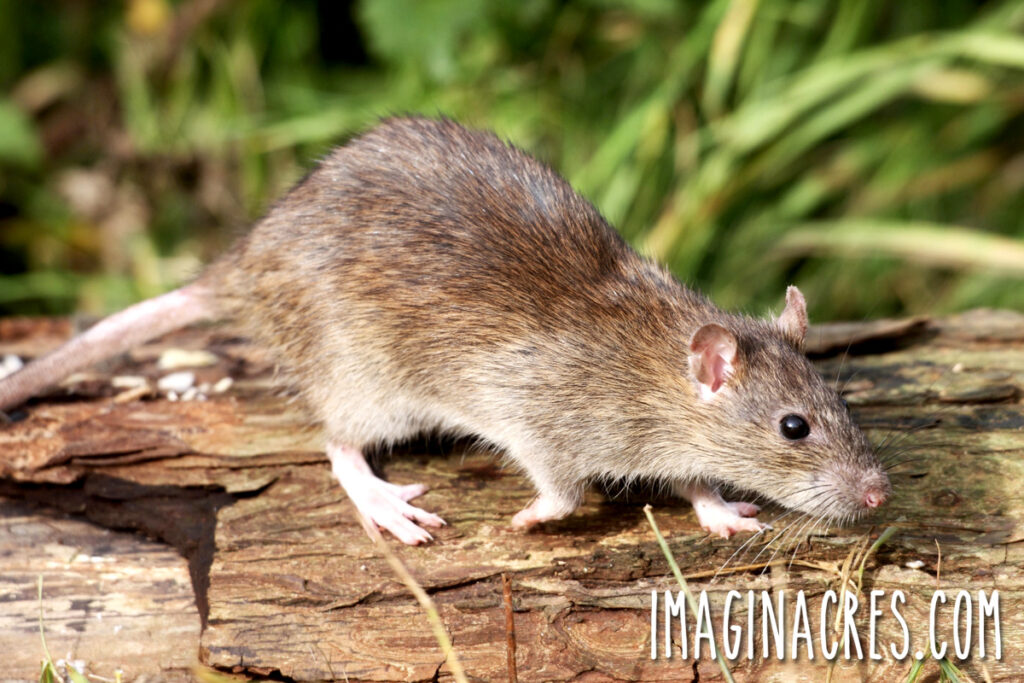
You Can Beat the Rats
If you’re dealing with rats in your chicken coop right now, I want to reassure you that you’re not alone and can get rid of them.
It might take some time, a bit of elbow grease, and a few creative tricks, but with persistence, you can kick those unwanted guests to the curb and keep your flock safe, healthy, and stress-free.
We’ve been there. We’ve seen the gnawed feed bags, the stolen eggs, and the mysterious burrows leading straight into the coop floor. But we’ve also come out the other side wiser, better prepared, and a whole lot more determined.
Take it one step at a time:
- Cut off the food and clean up.
- Seal every entry point you can find.
- Trap what’s left and then keep it from coming back.
Your chickens deserve a peaceful, pest-free coop. And you deserve the peace of mind that comes with knowing the rats have moved on for good.
Note: This post was originally published on November 1, 2013, and updated on June 20, 2025, with everything we’ve learned through trial and error and plenty of late-night rustling near the coop. We’ve added new tips, tools, and long-term strategies to help you keep your flock safe (and rat-free) for good.
You May Also Like:
- How to Get Rid of Flies in the Chicken Coop
- Securing Your Chicken Pen: Why Hardware Cloth Trumps Chicken Wire
- 5 Tips for Introducing New Chickens to the Flock



How appropriate that we just captured and killed our first chicken coop rat yesterday! We also are struggling and will
def have to try some of your methods!
How timely! Really getting rid of any access to food was the only thing that worked for us, I hope you can get rid of yours!
I have to use poison. My floor is dirt, the building is old, the coop top is chicken wire and the rats have burrowed so many times under the sides and floor that it looks like swiss cheese. (should have been chick wire on top and around the lower sides, as even the wild birds come in to munch.) but I am happy to report that my chickens, one Rhode Island Red rooster, and three game hens (about half the size of the rooster) will NOT eat or even peck at a poisoned rat. Instead, they tell me how very upset they are that this still-wiggling, sick things is in their house, and will I move it immediately? Then, after I scoop up and toss the dead or dying rats, there are sometimes three or four at a time) the biddies run around looking at all the spots there were nasty old rats, to assure themselves they are really now gone, then they calm right down and begin to act like chickens again. Poor things. I saw a new ratproof feeder that doesn’t have the overhead paddle, and am going to try it. I saw it is metal. Although rats will chew through metal, I am hoping if I pit it onto a metal plate pad, I am hoping they will not like the feel of the metal against their feet so that they wont want to hang around long enough to chew through the metal. They really are the nastiest things on Earth short of a rattlesnakle.
I’m so glad your chickens don’t eat the poisoned rats! I’ve heard of that happening to other people. Rats are so hard to get rid of once you get them. We found this was the only way that would work. There are so many of them out here and they just kept coming even though we were killing several a day! Horrible!
if you know anyone with cats or ferrets – soiled bedding/litter is a very useful rat deterrent – we had one rat come… since then I have scattered used litter around my perimeter fence and not a single rat sign since – however I do live in the countryside and there are many other sources available without risking my coops and runs.
we also lift their feed hoppers every evening, the coops are shut at night and they are raised off the floor so there is no ‘hidden’ route available.
You are so right! We had a rat infestation last year…so bad that tgey were c,imbing up the ivy on the house and cbewed themselves a hole to get in.
My husband looked up in ourbedroom hvac vent and saw a snake looking right at him.
Sure enough we found rat droppings and snake skins in our attic! Yikes!
We had our local Terminex guy come out to drop poison and set traps. Didn’t catch any snakes but we did catch many rats and mice. It gives me the creeps just reliving it.
I have killed numerous copperheads. They are docile enough that I can get my tree loppers around their necks (do snakes have necks?)and lop of their heads, paying close attention to where that head winds up.
We also have diamond-back rattlesnakes and coral snakes-both of which are deadly. I leave the killing of these to my husband who blasts them with a large air pellet gun. It does the trick. The only time we have had these critters come to visit was in the dead heat of dummer, when there’s been no rain and everything is dry and thirsty.
I really hate to kill the snakes but I can’t afford my dogs to get bitten. Our vet has started inoculatjng the dogs with a new vaccine for snake bite-vipers mainly. I will begin giving them the shots every three to six months to build up their antibodies.
This is really a great stride in vet medicine, especially for those of us who live in the great Southwest.
Love your writings! Please keep up the wonderful information!
Marquita
About a month ago i walked out to collect the eggs in my coop and came face to face with a rat. I have had my girls now for 5 years and never seen any signs no dropping nothing. After reading up on best way to get rid of rodents my first and only try worked. Plain old black pepper worked for me and it is cheap. After cleaning out the coop I shake it back into the cracks and around the roof area.
Wow that’s great! I’m so glad you found a quick solution. I’ll have to try it out if we ever have problems again.
This site really helped me with finding a natural solution to our rat problem as I don’t believe in killing anything. We noticed one very large grey rat in our chicken run one day because we had been leaving the door open for the girls access to food while they free ranged. As I am home all day, I spend a lot of time with the girls and this was the first time I’d noticed it so it had been getting fed elsewhere first. It was then we noticed our neighbour’s who regularly feed the birds were on holiday so of course the bird feeders were empty and we put two and two together. The rat decided the chicken run was the next best thing. I was seriously concerned there were more than just the one, based on internet research and so we started with cayenne pepper and black pepper, throwing crushed mint leaves everywhere and it didn’t seem perturbed – although I think I heard it sneeze when I chucked black pepper into the bushes. Next we bought a humane rat trap and all it did was eat the peanut butter clean off the bars (we put quite a lot in there) but the trap itself failed. I was quite pleased because I didn’t know how we were going to handle the whole catch and release aspect. I then found your site and read about exclusion and that was it. We had to remove the food source which meant retraining the girls about where they got fed and any spillages inside wouldn’t be an immediate issue. They need to climb up steps into their coop to get to the food – rats will not enter this area during the daytime and cannot gain access at night time. This is what worked for us and, our neighbours returned from holiday and the rat has long gone, never to be seen or heard from again. Thank you very much for sharing your idea as it saved us a lot of stress.
I’m so glad it was helpful Amanda!
I enjoyed learni f about your rat trials.
But just remember….rats just relocate. If you keep chickens, the rats will still be around waiting for an opportunity to get in your coop without problem.
The 2 different peppers are a great idea and I will try it soon.
Just remember….no matter where you live and keep chickens, the rats are near by looking for a way to get in AND if there are rats and/mice, sooner or later there will be snakes. All snakes eat rodents. So be careful!
I love those traps! We don’t have rats, but we have plenty of mice. Best bait – Slim Jims! They fit perfectly in those little round bait spaces. Glad you finally found a solution to your problem 🙂
Slim Jims?!? I would never think to use those! We tried peanut butter for awhile, but it was so messy, and every morning our traps would be shut, with no rodent inside, but the peanut butter licked clean. No idea how they were getting away with it! If we ever have problems again, I’m totally going for some Slim Jims!
Those suckers were pretty pesky, weren’t they! We had a rat family in our almond tree! We didn’t know why we saw plenty of almonds in the tree, but hardly any of them fell to the ground, so we figured the birds were getting all of them. Then one evening my hubby and I were taking a dip in the pool and noticed the silhouette of a rat in our almond tree. We were amazed when another one appeared, then another. Probably at least a dozen in all! Our backyard neighbor was also feeding their dog’s kibble outside, so those rats were pretty well fed. We had to resort to one of those traps where the rat goes in and eats a poison cake-like thingy and then goes back to their nest to die. I hate using poisons, but apparently this worked. Thanks for sharing your method!
Ehhhh!!! When you said you saw the silhouette of a rat at night, it made me think of a terrible horror flick! I’ve never looked for them in trees, only see our abundance of squirrels up there (and what’s the difference, really?)
We considered using poison as well, we got really desperate to get rid of them. I was too scared the rats would die in the coop and then our chickens would eat them and get poisoned as well. I’m glad we found another solution and am hoping it lasts! Thanks for stopping in Vickie, I enjoyed your story!
Hi, we had both rats & mice in our airing cupboard a few years ago. Very unusual to have the two at the same time. We live out in the countryside so is something we are vigilant about, plus I just hate rodents! Well we take in wwoofers (willing workers on organic farms) and the one we had staying with us at the time was an environmental control officer – she said that the mice can get in a hole that is pencil thin and the rats thru one not much bigger – hence why the chicken netting didn’t work. We stuffed every hole we found with wire wool then squirted some of that stuff that expands. Seemed to solve the rat problem. Unfortunately our cats both believe in the kind fisherman adage of “catch & release” – bringing their mice indoors!
That’s incredible Elizabeth! I had no idea they could fit through cracks that tiny! That totally explains why the chicken wire wasn’t doing anything against them. Our cat wouldn’t be any help against them either. He’s a lazy bum, would probably just glare at them in disgust!
in the video we had 4 barred rock and 2 black sikleis. They are now about 8 months old and we get an egg a day from the barred rock. The sikleis have gone extremely broody and would rather sit on eggs or golf balls than lay, but they are good with the kids so we keep them around.
I hate to burst your bubble but…rats live in “the country” too. They lived here long before we did, certainly long before we got our first chickens. There are lots of things that can be done to send them packing, looking for food and water elsewhere. Personally, I think treadle feeders are the key to keeping them from getting a free meal in the coop or run.
Cheers!
Kathy Shea Mormino
The Chicken Chick
Oh boy! I have never heard of rats out in the country! I’ve heard Grandpa’s Feeders are the best, I went with a cheaper option for our feeder and totally regret it, just money down the drain because it didn’t function as it was supposed to. Thanks for sharing your tips, I need to pass them on to some of my friends still dealing with rodents!
I am shopping for a treadle feeder, could you reveal which brand you bought that did NOT function? I’d hate to make the same mistake. I am currently looking at the feeder made by OK Carpenter Shop. Anyone have reviews on that one?
we use cement and flour to maintain the rats in our barn,they eat it and when they drink water they swell and die.
Now that’s just plain diabolical….and very smart! Gonna do this too! Thanks muchly for the great tip!
I made my own treadle feeder out of a small step on plastic rubbish can since I didn’t want to spend a lot of money or build one from scrap wood. I just attached a flat piece of wood to the pedal (drilled a hole and attached with a screw) so they would have a bigger step pad. I made the inner can smaller by cutting it and making a new floor that the girls can reach. The lid is made of plastic so if comes down, it won’t hurt them, but heavy enough to stay down and keep out rats and wild birds. Total cost $15 🙂
Wow, Christine, I’m impressed!! That’s actually totally brilliant and I never would have thought of it. I think treadle feeders are a wonderful way to rat proof your coop as long as you make/buy one that actually works! I really regret going with a cheap-o company for my treadle.
I beg to differ that fealme impostor in the commercial is dumber than a factory turkey. And as noisy as a hen aaaall impressed w/herself. I LAID AN EGG!!! I LAID AN EGG!!! OH. MY. GOD. IT WAS THE MOST INCREDIBLE EXPERIENCE, THIS MORNING I WAS A CHICK & NOW I AM A WHAT? I’M A WHAT?! HOW DARE YOU YOU LAID AN EGG?!? YOU LAID AN EGG!! YOU LAID AN EGG!! YOU HAVE WE EVER MET BEFORE?
Christine, can you post pictures of your chicken feeder. From your description I don’t quite understand how it works. Thanks!
Thank you!!! I think you are correct in your assessment and in your response!
Thanks. Good article. I have a major rat problem…..which is annoying as I only have 2 chooks! But I found that when I was really careful about food scraps, they started eating my lemon tree:( 🙁 very annoying. And our yard is small, with neighbours close, so I am really worried. I have 3 cats, only one of whom catches rats, just apparently not the ones in our yard!
Oh no! I’m so sorry they’re eating your tree. You may need to resort to traps or some other way of getting rid of them. We came very close to buying some sonic sound rodent repellents because we heard they work wonders, but we tried the new feeding system instead and it worked so we never bought them. For us that would be the last resort (because of the expense) after trapping them. Maybe give it a shot? I hope you can find something that works for you, that’s a tough situation.
I tried the sonic mice/rat revelers years ago and they didn’t work. I’ve used lemon ammonia in their holes, usedto cat littet, peppermint, and nothing works! We bought today a rat trap that uses 4 C batteries to zap and kill them! We are in trying mode now. Cost was $39.00. Not cheap, but I hate to use bait that poisons. We have young cats, dogs hawks and owls it takes up to 24 hours for the rats to die! We have 7 acres so its next to impossible to walk the property to pick up dead rats plus I feel would need to do it hourly to keep all other animals safe.
We bought one of those as well. They DO work, but be careful with them. Ours ended up killing a squirrel and I felt so bad I never used it again. I was too afraid a little bird or something would wander into the trap and get shocked. I’m glad you’re not using poison, it’s really a total last resort. I hope you can find some relief soon!
PINE I GOT SKIDS IN SIDE IS PINE WOOD CHIP THEY R GONE..I PUT IN GRASS DIRT BOTH FRONT AND BACK FENCES PINE WOOD CHIPS THERE GONE NOW I DOING FLOWER BEDS AROUND OUT SIDE AND I PUT PINE WOOD CHIPS IN IT TOO..BEEN ADDED MORE AND MOR FOR OVER A YEAR NOW
mike jones on fb
Quite entertaining, Meredith, and I’m glad in the end you found a simple, common sense approach that worked!
I’ve been meaning to try that for a long time, just haven’t yet. Thanks for sharing your experience, we’ll have to give it a go one of these days!
Kudos to you for writing about the rats. We’ve been battling rats for a couple years now. We’ve resorted to feeding the exact amount they need as well and that works for the chickens, but we still see them because they live in a neighbors rotting shed. NOW they’ve gotten under the house and are coming under the furnace to harass our rabbits in the garage. It seems like every time I figure out how to rat proof one entry they find another.
Great advice but I’ve tried all of these things already, including the bait that you can buy from the country store. I’m hoping there is only one critter [it has the cheek to pop out of one of its tunnels during the day when the hens are dust bathing] but realise that it probably has a wife and kids at home in next doors’ barn. Our spaniel is driven mad by the possibility of actually catching something and it sickens me to think that i shall need to resort to professional strength poison unless you can think of anything else to try.
Hi Ali,
If you’re seeing one rat in the daytime you can bet there are many many more. You may want to read this other article I wrote for backyard chicken project, it has a few more tips in it. If nothing is working for you, you may have to resort to poisons or calling an exterminator. There is something that seems to work for a lot of farmers that isn’t poison per say, but does kill the rats. You mix corn meal with plaster of paris, and when the rats eat it, they can’t digest it and die. It seems a bit cruel to me, but if it comes down to rats dying or your chickens dying, I’d chose the rats. Hopefully you’ll find something that works for you!
Wow-that was very comprehensive. Since contacting you i have visited the store and bought some more poison which is in little plastic bags. The staff explained that rats are grazers and only eat a little bit of bait at a time and there fore probably don’t get a therapeutic dose. But they like bags [as we know] and will have a go at them. My tunnels now have a bag stuffed well down and covered with rocks so the spaniel can’t get at them, and a trap baited with chocolate/peanut butter is in the compost bin. I will try the plaster of paris method if this doesn’t work. Even if this does work I’m sure they will be back as my neighbours have a barn at the end of our garden. Thank you very much. A x
We had chickens in the big big city and of course we had rats too. We chose to kill them off, and were successful. Unfortunately we didn’t see the small hole they chewed in the chicken wire covering the bottom of the coop. Since the rat population was now obsolete that brought in a weasel. That weasel, well weaseled it’s way into to coop via that chewed hole. We lost our three birds that sad night.
So getting rid of rats is very important. We’re now outside the city and are dealing with chipmunks (albeit, cuter, just as obnoxious) We do not use a feeder this time around and portion out food twice per day. (which by the way, helps call the hens in before dark as they’re all hungry, so they come in easily) The chipmunks still enter in the daytime when the coop is open – but there is so little in there they run out and search the yard instead. So I can see how your method is working perfectly!
Darn rats eh?
Treadle feeders that are tall need to be fastened to a wall or post to prevent them from falling over when too many birds step on the pedal. We include a cheap salvaged 2 x 4 block with our feeders, screw that block to a wall or post, or to a large chuck of plywood (not recommended unless it is pretty large) and drive some screws through the side of the feeder into the 2 x 4 block. Problem solved.
A feeder properly installed will eliminate the rats as long as there isn’t other food around for the rats.
The other mistake people make is trying to train a flock to use a new feeder and not taking the other sources of feed out of the coop. Why would they try something new and scary? Only if they are hungry and then they will learn to use the feeder in one day.
Rats!!
Hi all. Having trawled the internet for an answer I though I would try here. I am in the UK but wherever you are rats is rats or at least that is what I had thought. We have a few acres of open fields ad a number (originally 16 free range chickens including 1 cockrel). We started loosing eggs and then chickens a few weeks ago 1 every other day, each morning there would be a half eaten chicken. We suspected all the usual suspects wild mink, stoats and weasels, even birds of prey but none made any sence. The poultry area has a 3000volt electric fence which stops most so clearly this was either a fly in or an already inside the fence situation. Finally we obtained a wild life camera and set it up. We firstly noted that the electronic pophole door was not working correctly and took this off to be repaired, that night we found our culprit, a rat. He was getting into the coop and grabbing the chicken by the rear end imobilising them and basically eating them from the rear.
Our investigation only indicated a couple of rats but that is no consolation when they too intelligent.
On this occasion the rat picked on the cockrel which flew out the open door with the rat attached. He survived the attack and we replaced the automatic door the next day we also checked for holes oround the house and did the necessary repairs. Next day dead chicken in coop and a new hole chewed in the coop. We have tried bait boxes, traps and even waited with a gun but to no avail. We are now down to 7 chicks and a cockrel with a bruised ego.
There is no food left in the pen or coop and we are considering giving up poultry completely concerned that when we run out of chickens it will pick on our ducks and geese.
We are really looking for any ideas
Hi there!
I sent you an email with my response to your problem as it was too long to put in here, and I wanted to make sure you got it. If you didn’t receive it, please let me know and I can re-send it. I hope you guys get this figured out soon and don’t have to stop raising chickens. Predators can be the absolute worst!
I am struggling with this problem right now; how did your compost do in steel garbage cans? I am trying to figure out what to do about my compost. I am getting ready to move it (it’s currently open bin) and was thinking I might have to stop composting.
Does it work to put the compost in steel trash cans? Does it still compost?
Thanks!
Hi Anne,
It does pretty well, not amazing, but pretty well. It’s really hard to turn the compost when it’s in cans, so I kind of wish we had invested in a heavy duty compost tumbler instead, but most of the tumblers are made of plastic which the rats can chew right through. We still compost non-edible items in a loose pile, things like litter from the coop, leaves, weeds, grass trimmings, and whatnot. That helps a lot, because we don’t have space in the steel cans for all of that stuff. If you choose to use the cans, you will need to turn the compost pretty frequently to get it to break down. It may be worth stopping composting for a little while until you get the rat situation under control.
Hi, I have baby chicks about a mouth old now. They are quite small and I have just discovered a rat hole in thirt coop. Their coop is built over dirt, so it’s easy access for a rat hole. I have no idea how to get rid of them. We’ve had rats before and poisoned and captured them. Is poking a long stick in the holes a good idea to get them out so I can capture them.
Hi there,
You’ll have to use rat traps to get rid of them, and I would strongly consider laying down hardware cloth on the bottom of the coop. The rats will dig right under into the coop and they will kill and eat your chicks. We’ve had chicks up to 3 months old killed by rats in the coop. This post I wrote for backyard chicken project is more comprehensive and should help you to get rid of them, but you will have to find a way to block their path into the coop or they will kill of your birds.
Years ago I owned an acreage. It came complete with a chicken house so the first spring, I came home from the farm store with 53 baby chicks. I kept 15 over the winter. The following spring the rat invasion began, both in the rabbit building and in the chicken house. I threw warfarin packets in the rabbit house under the cages. From what I read, pets can regurgitate the poison but rats can’t. I did not want to use it in the chicken area of the chicken house though so came up with plan 2. I filled a 5 gallon bucket with oats and put a little ramp from the ground to the top to make access easy. After a couple of days, I emptied the bucket, filled it almost to the top with water, floated oats on the top, replaced the ramp. The next morning, the bucket had quite a few drowned rats in it. After following this procedure several times, the rat problem disappeared.
Whenever I see a pin of a free choice chicken feeder on Pinterest, all I can do is shake my head. In addition to being an open bar for rats, leaving feed out also attracts roaches, most of which show up at night while the chickens are asleep. Once either one gets a foothold, it’s the beginning of a war. If you see/trap one rat, rest assured there are 20 more lying in the shadows. And, as those of us near rural areas can attest to, a high rat population soon means a high snake population as the snakes are attracted to all the squeeking going on at your place. My last house was by a field and the mice and rats tried to take over the house one year. I had traps everywhere. Nothing like opening up your silverware drawer and finding a mouse stuck to a glue trap, with a snake stuck right behind him, to brighten your morning. :/ Finally had to call in an exterminator.
i am so glad to have read your comment. i thought i was alone in the struggle. they have even eaten the wiring INSIDE the lid of my stove so the oven won’t light and did an exterminator really work long term? i live next to a park and i think i need traps along my fence.
thanks again,
Lucy
Best way to get rid of any amount of Rats is a Jack Russell dog they where bred to kill rats & are scared of nothing no matter how big. They shake vermin to death quickly rats are sniffed out, found & killed with no mess. I also use dry Plaster of Paris mixed with equal amounts of dry corn put it in a sealed sandwich bag & shake so corn is covered keep it dry close to a little water After rats eat this delightful last meal & rat drinks water the mixture sets solid inside the rat killing it with in 10 minutes. Far better then using & handling poison that takes a few days to kill the rat after been eaten.
Thank you!!!
I’ve never had a rat issue in my coop until this year. While away on spring break, I had a friend stay on our farm to do chores. She went out into the coop (AT NIGHT!) and saw 5 rate scurry and 1 rat landed on top of her head and hooded sweatshirt! Poor girl.
So I will remove all food each night until they are gone. Thanks for the tips on what worked and what didn’t.
S. Larson
How are you able to use the rat traps without the silly bird brains stepping onto them and crunching a leg?
Rats are nocturnal which means they tend to sleep during the day and be awake at night. Set the rat traps up at night around the coop and remove them before letting the flock out for the day.
thank you sooo much, I was doing all the mistakes, but now I have some hope to get rid of them, thanks to this article.
Thank you for your article. I’m so glad I read this and won’t now waste time on other prevention methods.
Hi,
I also have a rat problem. I have started to put the food away at night. However, during the day I work. I have to put their feed out during the day in their run because I am gone for 12 hours at a time. Unfortunately, the girls are messy eaters and then get food on the ground in the run, which the rats will come to find later. I would have to wait till 7pm to feed the gals if I were to try to feed them outside the run when I get home. Also, I sometimes leave for 3 days at a time. During this time I have to leave enough food for them while I’m gone. I’m sure the rats feast all night long. Any suggestions?
Alysss, I am sorry you are battling rats. I’ve had great success with using a rat proof chicken feeder, which I mentioned in the article. Have you had a chance to check out the tips? It might be worth considering to help address the issue, especially when you’re away for longer periods.