
Deep Litter Method in the Chicken Coop
Learn how to use the deep litter method to keep your chicken coop clean, reduce winter chores, manage manure, and create rich compost for your garden.
Looking for a way to keep your chickens warm and cozy in winter while minimizing coop chores? The deep litter method is a cold-season coop management system that creates warmth, reduces cleaning, and builds compost all at the same time.
When it comes to homesteading, we’re about as easy going as you can get. Cleaning out the chicken coop every day and following around our darling little chickens with a pooper scooper is not my idea of fun. This system was made for people like us.
We’ve used the deep litter system in our winter coop setup for years, and it has helped keep our flock comfortable through freezing temperatures and saved us a ton of time.
Whether you’re preparing your coop for winter or looking to simplify seasonal cleaning, the deep litter method for chickens is a practical and sustainable approach.
What is the Deep Litter Method?
The deep litter method is a way of managing coop bedding by building up layers of organic material throughout the winter months. Instead of removing soiled bedding every week, you stir and add to it, allowing the material and droppings to break down naturally, much like a compost pile.
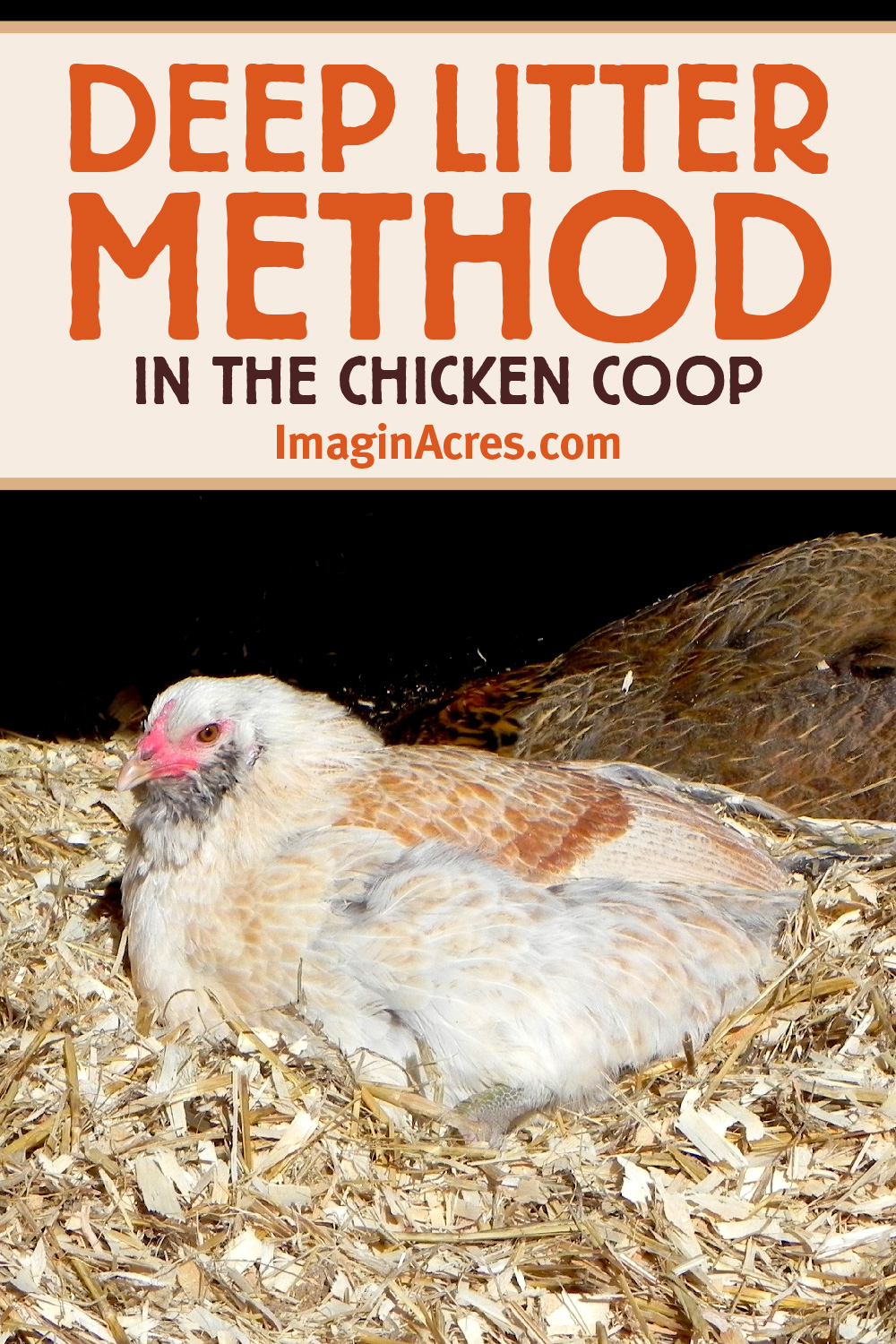
The deep litter method is a natural, low-maintenance way to manage chicken poop and coop bedding during the winter months. Instead of removing soiled bedding every week, you allow it to build up over time by adding layers of dry, carbon-rich materials on top of the droppings.
Chicken manure is high in nitrogen. When combined with carbon-rich bedding, the mixture begins to decompose much like a compost pile. Regular stirring introduces oxygen and encourages healthy microbial activity. These beneficial microbes break down the waste, help eliminate odors, and generate gentle warmth that can take the chill off the coop in cold weather.
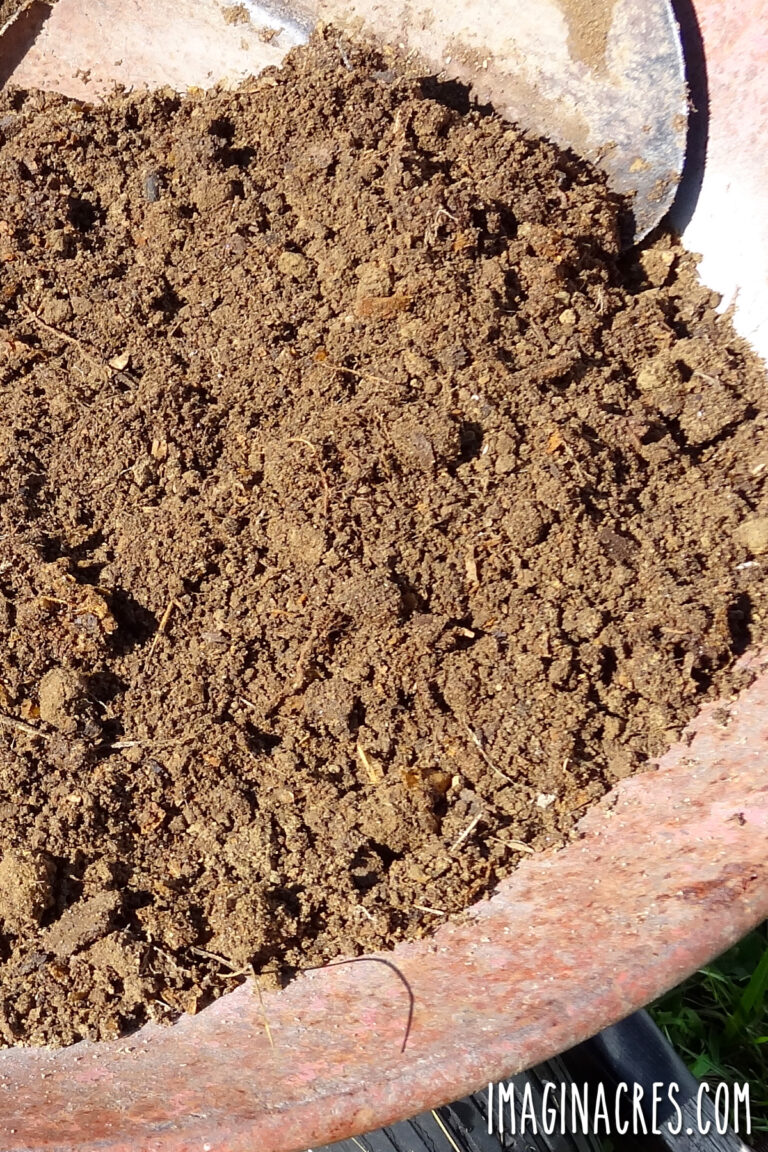
By spring, much of the material is partially composted and can be removed and set aside to finish breaking down into rich garden compost.
Note: The deep litter method is best used in cold weather only. It’s not recommended for summer, as the built-up litter can trap heat and moisture. For warm-weather tips, see How to Keep Chickens Cool: 10 Tips for Hot Weather Care.
Best Bedding for the Deep Litter System
When we say “litter,” we’re not talking about cat litter. Never use that in a chicken coop! We’re referring to the type of organic material that you lay down on the floor of the coop. Some people use wood shavings, some use leaves, and some use straw. Our litter is composed of any and all dry, organic materials that are high in carbon, break down slowly over time, and support healthy microbial activity.
For the deep litter method to work effectively, choose materials that are:
- High in carbon to balance the nitrogen-rich chicken manure
- Loose and fluffy to allow air circulation and microbial activity
- Safe for composting, so the finished material can eventually be used in your garden
Here are our favorite options for winter deep litter:
Fall Leaves:
We used all of the dry leaves raked from our yard in autumn. We also took bags of leaves from all over the neighborhood from unsuspecting neighbors (how nice of them to bag them up and leave them by the side of the road for us!). An easy way to pick up leaves is to use a mower with a bagger. Then store the shredded leaves in garbage bags until you need them.

Straw:
We put in random bales of dry straw that were used for Halloween decor and abandoned on the roadside. It’s especially fun to toss the whole bale into the coop and let your chickens do the spreading for you as they scratch around for seeds. You can also purchase chopped straw, which breaks down faster and is easier to manage.
Just keep in mind that straw tends to mat down and hold moisture, especially in damp or humid conditions. For best results, mix straw with a more absorbent material, such as pine shavings, to encourage airflow and reduce the risk of mold.
Pine Shavings:
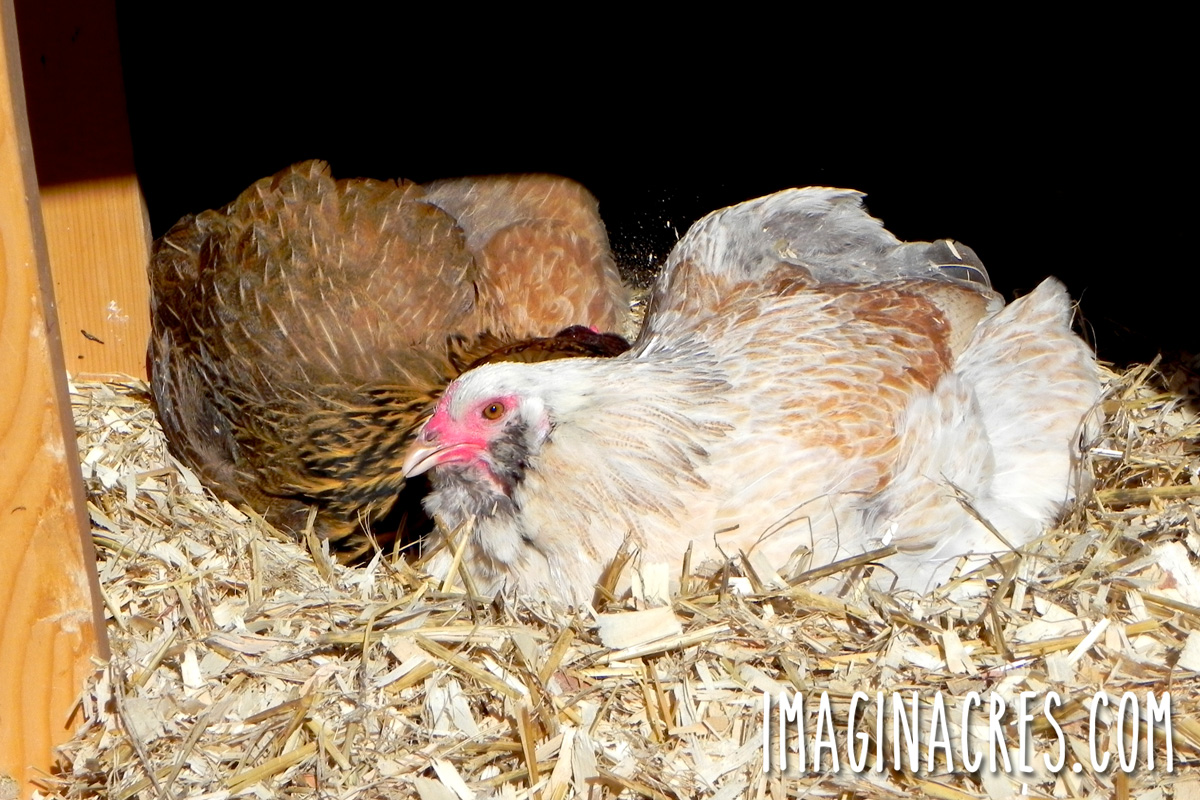
Affordable, absorbent, and inexpensive pine shavings are my go-to base layer. You can find bales of pine shavings at your local farm store. We also use piles and piles of cheap pine shavings from a local sawmill. These are kiln-dried and perfect for our budget.
Other Wood Shavings:
Aspen, poplar, and mixed softwood shavings (like fir or spruce) can also make excellent bedding choices for the deep litter method. They’re absorbent, compost-friendly, and safe for chickens as long as they’re untreated.
However, avoid cedar shavings, which contain strong aromatic oils that can irritate your flock’s respiratory systems and harm beneficial microbes. Likewise, skip any bedding that’s scented or chemically treated, as these additives may be toxic to both chickens and your garden soil.
Pine Straw:
Pine needles alone are not a good choice for the deep litter system because they do not absorb moisture. However, mixing pine needles with other bedding mentioned above can increase aeration and prevent clumping.

What Not to Use
While many organic materials can work well in a deep litter system, others can cause more harm than good. Materials that compact easily or trap moisture create an ideal environment for mold, harmful bacteria, and respiratory issues in your flock.
It’s also important to remember that everything you add to your coop will eventually end up in your garden through the compost pile. So it’s best to stick with organic matter you won’t mind adding to your soil.
Avoid the following:
- Grass clippings and similar materials: Don’t include grass clippings, hay, weeds, or any material that tends to mat down and retain moisture. These can quickly grow mold or create soggy spots in the coop, leading to health issues for your flock. While they’re fine for the compost pile, they’re not suitable for the deep litter method.
- Diatomaceous earth (DE) or lime: While often promoted for pest control, DE and lime also kill the beneficial microbes and tiny decomposers (like nematodes) that are essential for the composting process in a deep litter system.
- Scented or chemically treated shavings: These may contain substances that are harmful to soil life and should be avoided.
- Sweet PDZ (zeolite): This odor-control product doesn’t break down in compost. While small amounts may be harmless, regular use can lead to buildup in your garden soil. If you use it often, consider composting that manure separately or keeping it out of beds intended for food crops.
- Pelletized bedding: Wood stove or horse stall pellets are generally safe if untreated, but always check labels for additives or chemical binders before composting.
Instead, choose dry, loose, carbon-rich bedding that decomposes well and fosters a healthy microbial balance. It’s better for your chickens and your garden.
How to Use the Deep Litter Method
The deep litter method is a chicken coop system based on repeated layering of organic materials on the floor. The first layer of litter is spread on the floor of the coop. When the first layer is soiled, a new layer of fresh litter is added on top. This continues as needed to keep the chickens on clean bedding.
Here’s how we set up and manage our deep litter system during the cold season to keep our flock comfortable and the coop running smoothly:
1. Start Fresh in the Fall
Begin your deep litter system in late summer or early fall, before the cold weather sets in. Clean out the entire coop, removing all bedding, droppings, and any debris. This gives you a clean slate and reduces the risk of lingering pathogens or parasites.
2. Reserve a Bit of the Old Litter
Before composting all the used bedding, set aside a few buckets of the driest, most decomposed material from the previous season. This older litter is rich in beneficial microbes and will help jumpstart the composting process in your new deep litter base, like sourdough starter, but for your coop.
3. Lay the Foundation
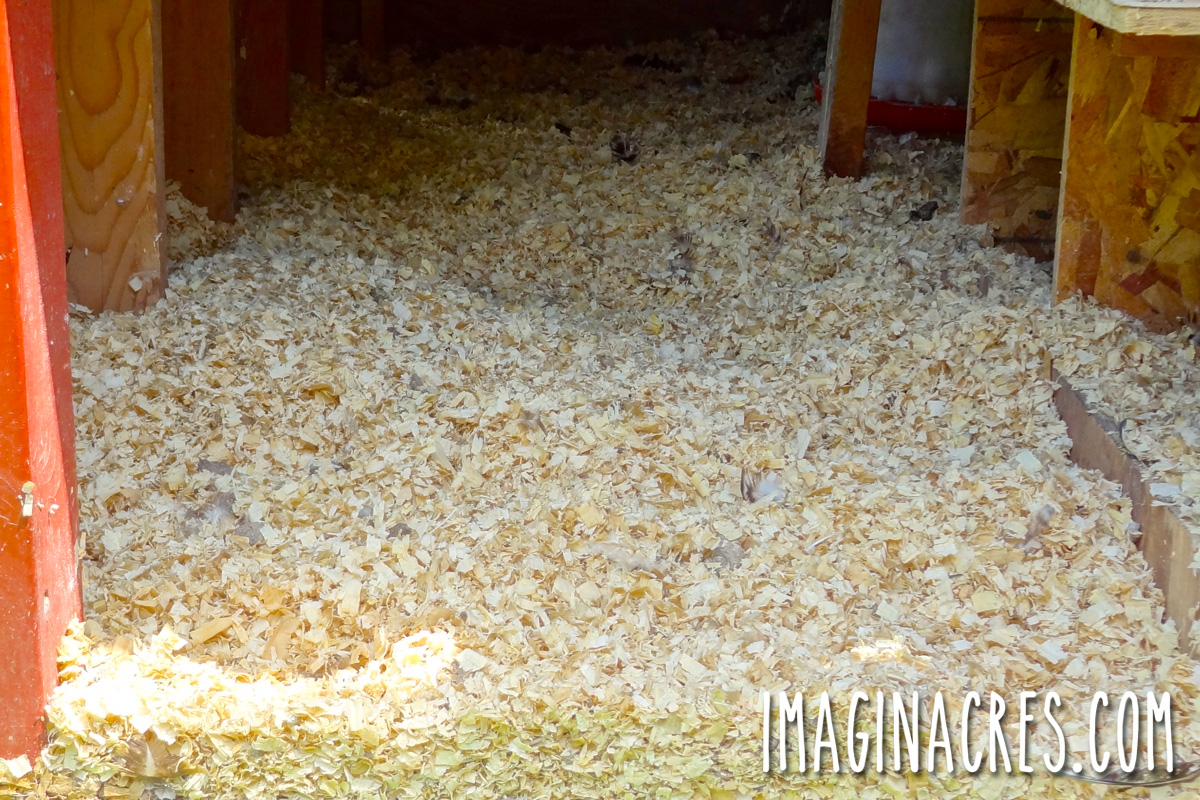
Spread the saved litter across the coop floor as your microbial base. Then, add 4 to 6 inches of fresh, dry bedding on top. The goal is to create a loose, absorbent layer that will insulate the floor and begin building depth.
4. Let Nature Work
Once your chickens move back in, they’ll start contributing droppings daily. As manure accumulates, it mixes into the litter and begins to decompose gradually with the help of oxygen and microbial activity.

5. Turn the Bedding Weekly
About once a week (or whenever you’re doing chores in the coop), use a pitchfork, rake, or garden hoe to stir the bedding.
Turning helps:
- Mix droppings into the lower layers
- Bring fresh bedding to the top
- Introduce oxygen to aid in decomposition
- Prevent matting and compaction
This step only takes a few minutes, especially if you keep up with it regularly.
6. Add New Bedding Regularly
Continue to layer on fresh, dry bedding every week or two, or as needed. Keep the depth at least 6 inches, and go even deeper during the coldest months. More litter means more insulation and better microbial activity, which keeps things composting.
7. Monitor Moisture and Smell
While the deep litter method is low-maintenance, it’s not totally hands-off. Watch for wet or smelly areas, especially around the waterer or under roosts. Scoop out any damp or overly soiled spots, and top off with dry litter to keep the system balanced.
Listen for the crunch of dry bedding when you walk in. If it’s soggy or smells off, it’s time to stir and refresh. A well-maintained deep litter system should have an earthy smell, not a strong ammonia odor.
Consider installing a poop deck or droppings board under the roost to catch overnight manure. I keep a layer of pine shavings here too. This reduces buildup in the litter and keeps things drier, especially if you have a larger flock. Clean the poop deck more frequently and add it to your compost bin.
8. Ensure Good Ventilation
Even in winter, your coop needs adequate airflow. A well-ventilated coop will allow moisture to escape and keep ammonia levels low, while still protecting your hens from drafts. Ventilation is the key to keeping the deep litter method working safely through the colder months.
9. Spring Cleanout
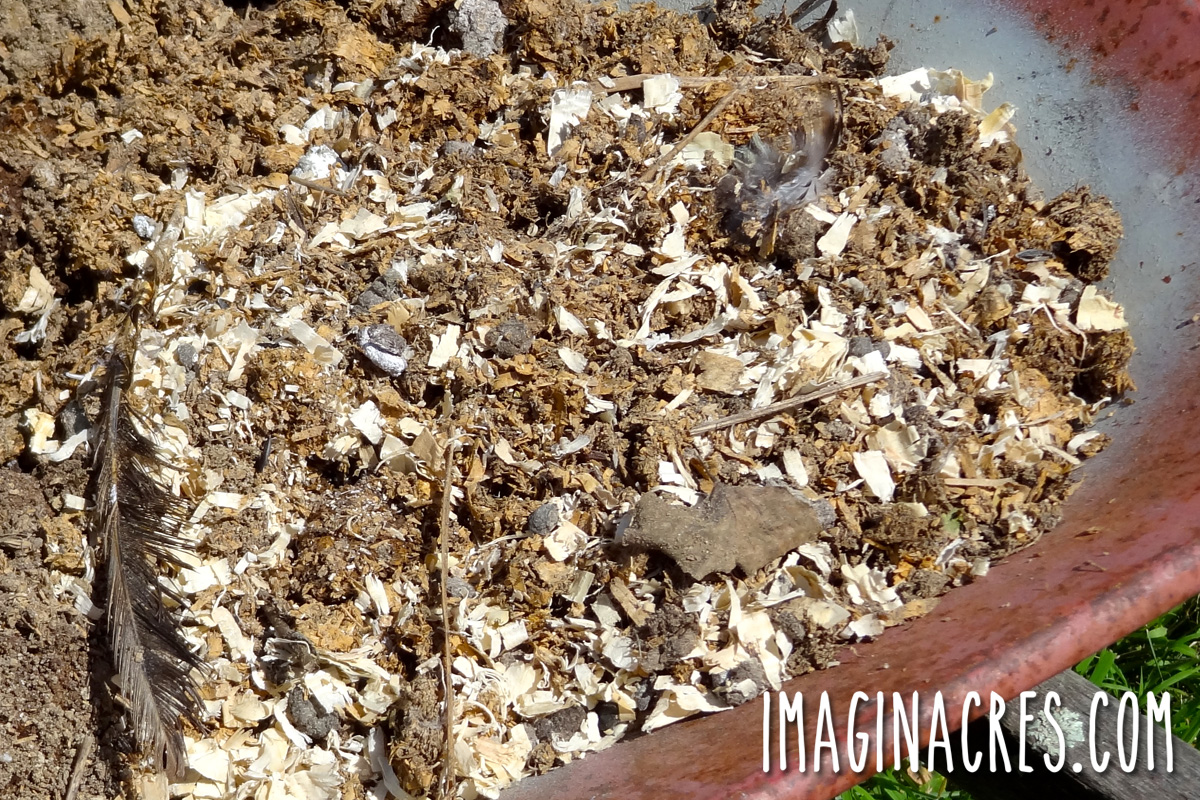
When warm weather returns in spring, it’s time for a full cleanout. Remove most of the built-up bedding and transfer it to a compost pile or bin to finish breaking down. Then add a thin layer of fresh bedding for the summer. Shallow, dry bedding will help keep your flock cooler and reduce moisture buildup during hot, humid months.
The material you remove in spring is only partially broken down. Compost it further in a pile or bin for at least 6–12 months before using it in the garden to allow pathogens to break down safely. Read more in our Guide to Composting Chicken Manure.
Pros of Using the Deep Litter Method in the Coop
- Budget-friendly: Especially if you use free or low-cost bedding materials
- Keeps ammonia odors in check: The litter absorbs most of the smell from chicken waste
- Natural composting: Creating quality compost is fast and easy
- Less frequent cleaning: You don’t have to clean the coop every week
- Flock enrichment: Tossing a handful of scratch grains or black oil sunflower seeds onto the coop floor occasionally provides your flock with a fun challenge and keeps them busy.

Cons of the Deep Litter Method in the Coop:
The deep litter system works best in coops with enough floor space to accommodate deep bedding and allow airflow. It’s ideal for small to medium-sized flocks. Overcrowded or poorly ventilated coops may struggle with moisture and odor buildup.
- Egg hunts in the litter: Chickens see giant piles of leaves and start laying their eggs wherever they feel like it. Ever searched for eggs in inches of dry leaves? Why won’t you use your nest boxes, chickens?! Why??
- Leaf collecting takes effort: It’s work up front to rake and gather the leaves. Your neighbors will think you’re insane when they see you stealing bags of leaves from their curb.
- Allergy alert: Turning the bedding can stir up dust or leaf mold. If you’re sensitive, wear a mask during cleanouts.
- Moisture control is key: Wet bedding can lead to odor and compaction. Stay on top of any spills or damp areas.
- Proper ventilation is essential: Even in winter, a draft-free but well-ventilated coop is a must.
What About the Rest of the Year?
The deep litter method works best during cold weather. In summer, bedding should be shallow, dry, and cleaned more frequently to help your flock stay cool and prevent heat stress. Need help managing your flock during hot months? Check out our guide on how to Keep Chickens Cool.
Good for Your Chickens, Great for Your Garden Soil
If you’re looking for a low-maintenance winter coop strategy that benefits your backyard chickens and your garden, the deep litter method is worth trying. It simplifies cold-season care and provides nutrient-rich compost to boot.
We’ve relied on this system for years, and our flock and vegetable garden have thrived because of it.
Have you used the deep litter method before? Share your experience in the comments. We’d love to hear what’s worked for you!
Resources and Further Reading:
- Storey’s Guide to Raising Chickens by Gail Damerow
- Deep Litter in Chicken Coops by Robert Plamondon
- Natural Chicken Keeping. “Deep Litter Method” by Leigh Schilling Edwards
Note: This article was originally published on January 7, 2014, and updated on July 28, 2025, with additional information and improvements for clarity. It reflects over a decade of real-world experience using the deep litter method in our own backyard chicken coop.
You May Also Like:

I’d like to use this, but I live in Utah and it is very dry. Can I still get a good compost? I’m afraid if I wet down the liter from time to time I’ll end up giving my girls colds.
Hi Erin,
I’m no expert, but I have researched deep litter thoroughly and from what I understand, it’s really hard to get compost if you live in a very dry area. I wouldn’t suggest wetting the litter, because as you said your chickens could get sick from the moisture. If you don’t want to clean out the coop weekly and want to do deep litter just to make life easier on yourself, it will still be effective, but you’ll have to compost everything after you remove it. Do you have a compost bin? Or a corner of the yard you can throw it all so it can decompose? You also may want to ask your question over at backyard chickens- they know EVERYTHING there and I’ve always gotten quick answers to my questions. People who live in your climate could tell you if it has worked for them. Good luck to you! 🙂
I live in Utah and do the deep litter method myself. When I clean out the coop I add it all right to my compost bin, or take it straight to the garden if it’s early enough in the season.
We use deep litter too and even through the -25 windchill out here in Farmington our chickens seemed cozy and happy. Although they didn’t come out of their movable coop until the temps get higher. 🙂
Ours too! I really think the deep litter helped to keep them warm in the frigid temps. Last year one of our leghorns got frostbite in the winter, this year, nothing!
Could you tell me, do you turn the bedding over completely each week or do you just turn over the top? Does the bottom layer have to remain untouched for the composting and warmth to happen? I am a complete beginner.
We are using the deep litter method ( or a form of it) for our shared stall of our 2 goat / 1 pony & 3 chickens it seems to be working great. The difference is we just add fresh shavings on the top layer the heat of the bottom layers seems to be providing heat to warm the critters in our unusual subzero cold we are having this year. I stopped cleaning the stall all the way out once winter started. Though I know it will be a major stall muck out come spring I am glad they had the heat of the decomposing bedding through this winter. Come on spring!
That’s so great that it’s working for you!! I feel like we don’t have enough chickens in the space we have to make it work quickly. It’s definitely turning to compost, but they aren’t producing enough manure to make it a hot pile. Look at me, complaining that my chickens aren’t pooping enough! What’s wrong with me?! Hahaha
Catching up on old posts. 🙂
Looking back, how has the straw worked out for you? We’ve been doing deep litter and I love it. We have five acres so I put away an absolute glut of leaves in the fall and just ran out. I’m wondering if the straw stays mucky or anything? You still recommend it?
Hi Mike! The deep litter worked wonderfully this year, we have tons of great compost and I didn’t have to clean the coop until this month. We used straw, leaves, and pine shavings as litter in the coop, and the only one that broke down really well was the pine shavings. The leaves did okay, and the straw barely broke down at all. It mostly got mushy and slimy and moldy, so I don’t think we’ll be using it anymore. I think we’ll keep using leaves because they’re free and I love putting them to some use, but I think they’ll break down better if I make sure to turn them more often. Thanks for stopping in! I’m going to write an update on the deep litter in a few days, I think there are probably lots of people wondering if it worked!