
Urban Foraging Guide: How to Find Free Wild Food in the City
Discover how to forage for wild food in the city safely. Learn what urban foraging is, where to find edible plants, and how to identify common greens, fruits, and berries, all while following local laws and sustainable practices.

Wild food isn’t just for rural backyards or deep forest hikes. It’s all around us, even in the city. Urban foraging is the practice of identifying and harvesting edible plants, fruits, nuts, and other wild foods growing in parks, yards, and public spaces. And it’s not just about food. It’s about reconnecting with nature, building resilience, and rediscovering the hidden abundance right outside your door.
Over the past few years, we’ve brought home bushels of food from our own backyard and forage-friendly areas around the city. It’s like a treasure hunt that feeds you. Here’s how to start your own adventure.
What Is Urban Foraging?
Urban foraging means seeking and harvesting edibles that grow in the wild. While it might sound unconventional, it’s actually a return to older ways of living, hunting, and gathering close to home.
You don’t need acres of wilderness or forest to forage. Your local park, a neighbor’s overgrown yard (with permission), or even a train walk might surprise you.
But before you start snipping greens, it’s essential to forage safely, ethically, and legally.
Is Urban Foraging Safe?
Urban foraging can be safe and deeply rewarding if you take proper precautions:
- Check your local laws. Foraging is allowed in some parks but prohibited in others. Always research city or state regulations.
- Choose clean green spaces. Look for public parks, community gardens, urban green spaces, or friend’s backyards where you know chemicals haven’t been sprayed.
- Avoid contaminated areas. Skip plants growing along busy roads, sidewalks, golf courses, or in industrial zones. Road runoff, pollution, heavy metals, or pesticide drift may contaminate these areas.
- Know your plants. Never eat anything unless you are 100% certain of its identification. Some wild plants are toxic or even deadly.
- Use reliable guides. Bring several foraging ID books and field guides, or use a trusted app to confirm your finds. Be sure to verify which plant parts are safe to consume before use.
Where to Forage in the City
You don’t need to venture far to find wild edibles. Look for areas with healthy, pesticide-free environments and rich plant diversity. The best spots often feel more like little slices of nature tucked into the urban landscape. Great foraging spots include:
- Public city parks (check regulations): Often planted with fruit trees, including apple, pear, cherries, and mulberry.
- Community gardens (with permission): The edges and paths can be a treasure trove of edible plants.
- Your own yard or a friend’s backyard: Corners of the yard under trees and bushes can be their own little food forest filled with edible bounty.
- Vacant lots or green belts in urban areas that are free of contamination and safe to access often have diverse habitats.
Avoid areas that have been sprayed with insecticides, pesticides, or pollution. Power lines, utility right-of-way, public sidewalks, and roadways are all areas to avoid due to soil contamination.
Tips for Responsible Foraging
Urban foraging is about more than finding food. It’s about sustainability and respect. Here are a few golden rules:
- Get permission: Do not trespass on private property. Instead ask permission to forage and be respectful. Some public areas are forage-friendly, while others all out ban foraging. Learn the local rules on foraging in public areas and follow them.
- Harvest mindfully: Only take what you need. The whole point of foraging is to live a more sustainable life. Only take a small amount of what you find and leave the rest behind for wildlife and to grow and set seeds for next season.
- Don’t disturb the area: Tread lightly. Don’t trample on plants, be obnoxiously loud, leave trash, or break branches. You should leave the land just as you found it.
No matter weather you are foraging in a friend’s backyard, or in a forage-friendly city park, respect the area, ecosystems, and other people around you. Foraging is still unfamiliar to many people. Respect public space and keep interactions positive.
12 Edible Plants You Can Find While Urban Foraging
Here are some of the wild foods we’ve found growing in the city in friends’ yards, local parks, and nearby neighborhoods. Most are easy to identify and delicious to eat. Finding free food is almost like finding buried treasure.
Foraged Wild Greens
Wild greens are best when they are foraged young. The foliage is less bitter and more tender. Choose healthy looking plants, and snip only a few leaves from each plant. This will allow the plant to continue growing. Greens make a great addition to mixed green salads and stir-fries.

Dandelion Greens
It’s no mystery that dandelions grow in abundance practically everywhere. Since we’ve never sprayed for weeds on our property, we have an unbelievable number of them that pop out of the soil every summer.
It blew my mind when I went to the grocery store and saw dandelion greens selling for $6 a pound, right next to the lettuce. I heard someone wonder out loud what they were.
I wanted to say, “Those are those weeds growing for free in your yard that you pay someone $50 a month to come spray with pesticides so they’ll go away. Yes, those very same plants. You could walk out your back door and pick them yourself, saving you gas, time, and money.”
The leaves of the dandelions are great in salads. In fact, you’ll frequently find them included in fancy mixed green salads at restaurants. They’re high in vitamins and great fiber! The leaves are also great sautéed and turned into pesto.
Where to find it: Lawns, sunny clearings, and gardens.
Edible parts: Leaves, flowers, roots
How to use it:
Lambsquarters
Who knew you could eat these pesky little pests? They’re even more invasive in our garden than the dandelions! Lambsquarters are a close relative of spinach and can be used in similar ways.
These adorable little weeds are best eaten young. They can be sautéed with butter or tossed into a salad. They’re utterly delicious. It’s a wonder more people don’t know they’re edible!
Where to find it: Gardens, disturbed soil, compost piles, and field edges
Edible parts: Young leaves and tender stems
How to use it:
Wild Mint
Fragrant and easy to spot, wild mint can be used in teas, salads, or desserts. It spreads easily and often pops up near old gardens or in damp areas.
Decades ago, someone planted an herb garden in our backyard. I found the remains of it when clearing weeds and leaves out. Bricks bordered the once loved herb patch, and plant markers with the words “Pineapple Mint” and “Lemon Basil” were found buried in the leaves. Only the pineapple mint decided to stick around, as mint so often does.
We find it popping up all over the yard every season. It’s a delicious addition to lamb roasts and morning tea. There’s so much it every season that we end up dehydrating big handfuls of it to use over the winter, and what’s left goes to the chickens for a healthy snack.
Where to find it: Stream banks and moist woodland edges
Edible parts: Leaves
How to use it:
Wild Chives
Chives are perennial plants that pop up in backyards and parklands all across the United States and Canada. My parents had wild chives growing in their backyard. As kids, we used to make it into onion soup and try to feed it to each other (it was gross).
As an adult, I’ve come to realize just how delicious and versatile this wild food can be. We toss bits of it into salads, chop it up to top potatoes, add it to homemade dressings, and pop it into soups and marinades.
Where to find it: Clumps of wild chives can be found along rivers, streams, meadows, park edges, and fields.
Edible parts: Leaves, roots, and blossoms.
How to use it: The leaves and roots can be chopped and added to salads, soups, and dips. The flowers are also edible and can be added to salads or used as a garnish.
Garlic Mustard
Garlic Mustard is everywhere, to the point that it’s become an invasive species in many parts of the country. We found it growing in abundance around my parents’ house and jumped at the opportunity to bring down the population a bit.
We chopped the fresh leaves up in the food processor and added lemon, olive oil, and spices to make a zesty pesto.
Where to find it: Woodland edges, trails, disturbed soil
Edible parts: Leaves, stems, and flowers
How to use it:
Plantain
Not the tropical kind! This common weed is full of vitamins and is useful both raw and cooked. It’s also used in herbal remedies for stings and bites.
This glorious weed pops up all over our lawn. It grows heartier than the grass! Plantain is finding new recognition as a miracle plant. It’s chock full of vitamins and can be eaten raw or cooked. The leaves can also be mashed up and used to treat wounds, stings, and bites.
Where to find it: Lawns, woodland edges, garden beds, disturbed soil.
Edible parts: Leaves
How to use it:
Foraged Fruit, Berries, and Other Delights
Foraging for wild berries is a lot of fun. They’re easy to find and identify, very abundant, and, of course, tasty. Search and identify berries mid-summer and make a note to return late summer into fall to harvest.

Wild Strawberries
Teeny, bright red wild strawberries pop up on the ground in June in parks all across the city. These are a treasure to find and are sweeter than sweet. The flavor is much bigger and bolder than that of those giant mutant grocery store strawberries.
We look forward to them every summer and eat these fresh off the plant.
Where to find it: Meadows, woodland clearings, sunny slopes
Edible parts: Berries, young leaves
How to use it:
- Eat fresh by the handful
- Garnish desserts or salads
- Make into jam or syrup
- Use dried leaves for a mild tea
Serviceberries
Our darling friend took us on a foraging expedition in the city, where we found serviceberry bushes in a large park. Serviceberries are also known as Saskatoon berries, Juneberries, and shadbushes.
We picked the berries for hours, and more ended up in our mouths than ended up in our baskets. They tasted like a blend of blueberry and plum. We used them to bake muffins and tossed them into smoothies.
Where to find it: The ornamental shrubs and trees can be found in many urban environments, such as city parks, community gardens, and public areas, including town offices and post offices.
Edible parts: Ripe fruit
How to use it:
Wild Grapes
In the same city park, we found wild fox grapes climbing the fences and trees. We picked them by the bushel, harvesting over 10 pounds in only an hour. People looked at us like we were nuts. We turned them into grape juice and grape jelly. Who’s nuts now, strangers?! It’s probably still me, but whatever.
Where to find it: Woodland edges, fence lines, trails, riverbanks
Edible parts: Ripe grapes and young leaves
How to use it:
- Grape Juice
- Grape Jelly
- Use leaves for stuffed grape leaves
Mulberries
Found on trees along paths or in old neighborhoods. The easiest way to find these is by the falling fruit. When ripe, they drop easily and stain everything. A good sign it’s harvest time!
There’s a great big mulberry tree growing in the atrium of our local hospital. It’s only about a mile from our house. This tree gets so weighed down with fruit in the high season it dumps the juice-filled berries all over the walkway. We considered it a service to society to pick as many mulberries as we could fit into our buckets. We also managed to fit some into our bellies as well.
Where to find it: Yards, parks, woodland edges, fence lines
Edible parts: Berries
How to use it:
Raspberries
Raspberries grow like weeds in the backyards of many of our friends. There were several days over the summer spent leisurely picking raspberries to stuff in our mouths. We also turned them into ice cream with our delightful ice cream churner attachment for the mixer!
Where to find it: Along fence lines, trailsides, urban woods, backyards, or in untended gardens.
Edible parts: Berries and young leaves
Ways to use it:
- Raspberry Ice Cream
- Eat the berries fresh or freeze for later
- Make raspberry jam or jelly
- Dry leaves to brew a soothing raspberry leaf tea
Blueberries
Wild blueberry patches can be found almost anywhere in New England. The plants thrive in the acidic soil and spread from underground rhizomes. We love eating them fresh, freezing them to enjoy in baked goods, and using them to make blueberry syrup.
Where to find it: Dry, open ground, sunny meadows, down dirt roads, and along walking trails.
Edible parts: Ripe berries
Ways to use it:
- Use in muffins or pancakes
- Low Sugar Blueberry Jam
- Homemade Blueberry Syrup with Honey
Bonus Harvests
Maple Sap
If you have maple trees in your yard, tapping them in early spring can yield your own syrup supply. We make syrup from the maple trees on our property every spring. It’s the best syrup we’ve ever tasted!
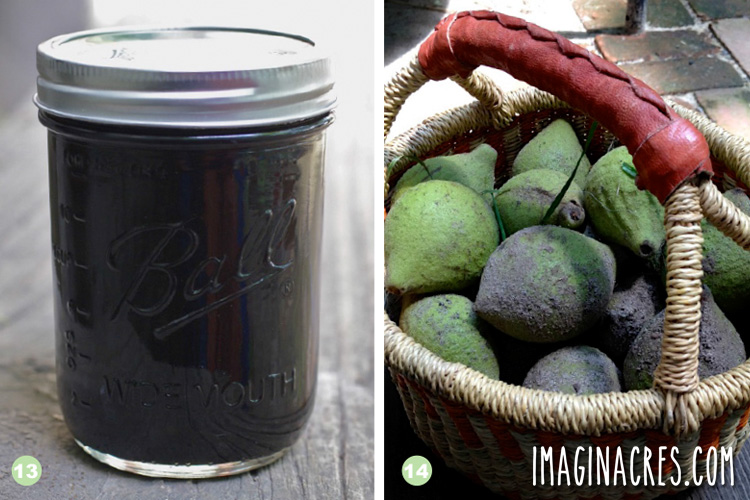
Black Walnuts
Found on old trees in neighborhoods and parks, these nuts drop in fall. Collect and crack with care. They’re tough but delicious.
Throughout the entire autumn, we harvested black walnuts that fell from trees in our yard and poured onto sidewalks all over the neighborhood. I bashed them between rocks in the backyard to remove the husks, much like my cavewoman ancestors would have.
Our terrified neighbors stared at me through their windows, but what else is new? It’s just the crazy lady bashing nuts in her bathrobe again.
In addition to eating them fresh, you can preserve them for later:
Getting Started with Urban Foraging
- Start small and learn a few plants at a time.
- Use a foraging guidebook or plant ID app.
- Go with someone experienced, or join a local group.
- Keep a journal to track your finds.
Happy Foraging!
Urban foraging has helped us cut down on our grocery bill, explore new flavors, and reconnect with the land right here in the city. Once you begin noticing the abundance around you, it’s hard to stop. Just remember to forage respectfully, harvest responsibly, and stay safe out there.
If you’re new to foraging, be sure to check out these helpful resources to get started:
- Beginner’s Guide to Safe Foraging for Food
- Spring Foraging Guide: 10 Wild Greens, Herbs, and Edible Weeds
- Guide to Summer Foraging: 8 Wild Fruits and Berries to Harvest
And if you want to take your wild food knowledge even further, I highly recommend the Online Foraging Course from the Herbal Academy. It’s packed with expert instruction, beautiful visuals, and practical tips to help you confidently identify and harvest wild edibles in your area.
Editor’s Note: This article was originally published on December 12, 2013. It was updated on July 7, 2025 to include additional details, improved safety tips, and updated foraging guidance for urban settings.





kinda sounds like fun!! It’s like hiking and grocery shopping all in one, only you can leave the coupons and the cash at home. Makes me inclined to try a little next year. I know that Craig would be down to do it. 🙂
Yes, you must try it! It’s so much fun, there’s free food everywhere!
We pick wild muskedine grapes an wild black berries here in NC.
Awesome! What do you make with them?
Loved your stories…I used to forage wild blackberries near my first apartment when my husband and i were first married…made the best blackberry pies from that…then the kids and I used to collect wild berries behind our home (before houses were built)…
Keep on foraging…and keep those stories coming…
Sol
Thank you! That’s so cool that you used to forage for berries near your home. It’s amazing how much wonderful free food there is out there if you just know what you’re looking for!
Such awesome bounty!
Thanks Kathie! We sure had fun this year.
This is a beautiful post! It’s amazing what people pay for Nettles, Dandelions, and even Plantain. And it all grows our backyards!! I’m sharing this post 🙂
Amber
Thank you so much Amber, I really appreciate it! 🙂
Hi! I do quite a bit of foraging in a suburban – semirural area. You are so right that you don’t need to go to the woods to forage. I find that there’s actually a lot more variety along roads, because sun exposure is better, resulting in more herbaceous growth, and more fruit and nut production.
I would love to check out your blog! I don’t know many other foragers, it will be nice to read your posts. I’ve definitely found more wild foods in more populated areas than out in the woods. If only more people knew they could eat some of the plants that grow in their yard rather than spraying them with pesticides!
We have a ton of wild blackberries and wineberries growing on our property. We also have lots of nut trees- chestnut, black walnuts and hickories. On my list it to see if maple sugaring is feasible in our climate and to find a local area to forage for elderberries!
How much do I LOVE that you’re foraging in urban areas?!! SO MUCH. I’ve gleaned – collected fruit from neighbors (who may or may not have known I was doing it) and made stuff from it and it’s been amazing. I’d love to go on proper foraging treks though. Especially where dandelion greens are concerned. They’re delicious, nutritious and generally AWESOME. They should never be considered weeds 🙂 xoxoxo!
We have a few mammoth black walnuts on our property and we crack open the husks by putting the nuts on our driveway and I make a few passes back and forth with the Jeep. It really saved some labor. 🙂
That’s such a good idea Mike! I must try that this year. Last year my hands were stained brown for over a week from ripping off the husks. It made for good stories but definitely freaked people out.
Hey I recognize that courtyard! You guys might have some crazy hippie company this year for mulberry foraging!
We just harvested some dandelion greens and flowers this past weekend for breakfast. We have lemon balm all over the place as well right now, along with violas (wild violets), Creeping Charlie (Glechoma hederacea), Purple Deadnettle (Lamium purpureum), and Grape Hyacinths (Muscari sp.) although I haven’t figured out what species of Muscari we have yet – neglectum or botryoides.
Yes!! You must join in the fun this year. That tree is so heavy with fruit it can barely stand up!
I’m so glad you’re having fun foraging! This is the best time of year as everything starts popping again. I can’t wait to get back out there.
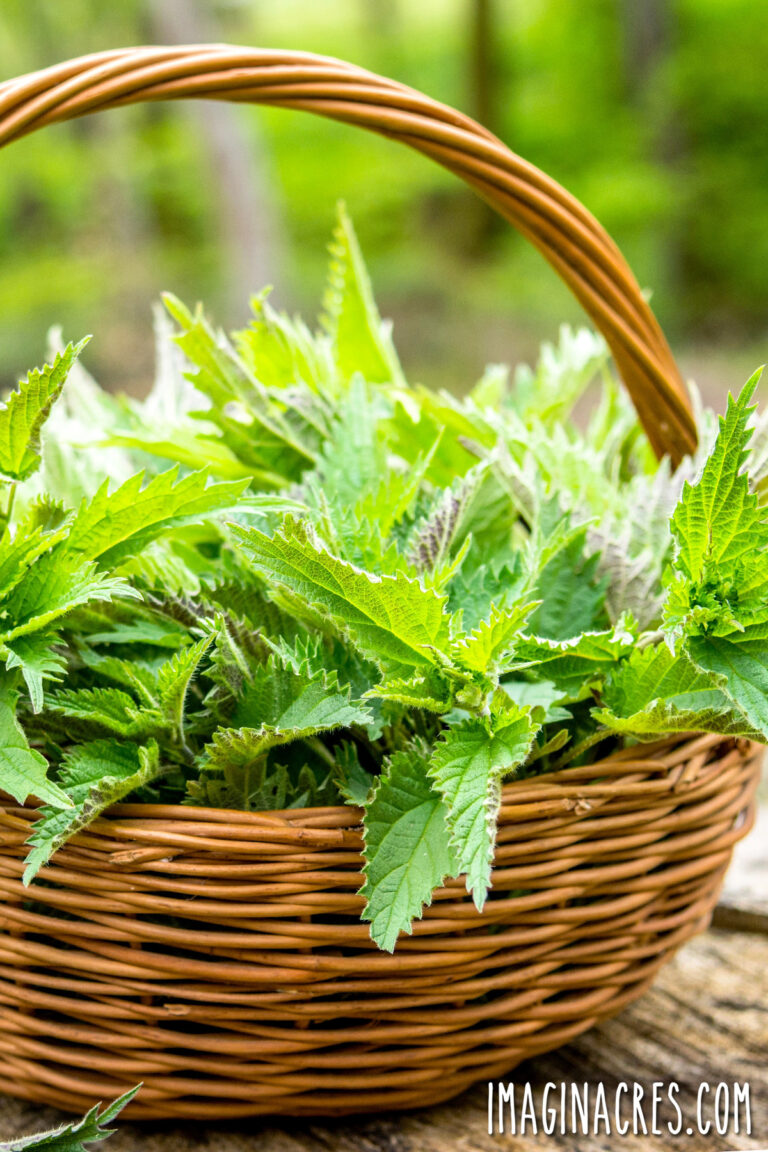
Blackberries, stinging nettle for pesto, dandelion.
I’ve never made stinging nettle pesto, I’m going to have to try that!
We do wild plums from a city park for jam. Prickly pears (cactus fruit) from in front of a pizza place. Mulberries, loquats (Japanese plums), pindo palm fruit, elderberries (fruit and blossoms), dandelions, stinging nettle, cleavers, plantain and anything else we can find for food and medicine. Last fall we found chanterelles in one of the local parks. Some other things you don’t think of as edible, as well. We have a podocarpus hedge in front of our house. It sets berries that are edible. You don’t get much, but they are an interesting little snack. We pick the growing tips from greenbrier (smilax), which is an obnoxious weed everywhere around here. I recently noticed a vendor at our local farmer’s market selling Bidens as a green. If I could sell what grows in my yard, I would make a fortune!! Then I discoverd it is medicinal as well. Haven’t eaten it yet, but have definitely tinctured it!
Wow! You guys have a bounty of food growing on your property! How amazing! Maybe you can trade some of it for other goods instead of selling it, I’m sure a lot of people would want to get in on that goodness!
I live in the Netherlands, so the plants I can forage are a little different. Some are similar though.
In June we go to the woods to pick blueberries; well… the Dutch version of blueberries, called ‘bosbessen’ (woodberries). This year was no fun though, we ended up fleeing the woods, because of all the ticks. We had an exceptionally mild winter, and it didn’t kill enough ticks (and other bugs, had lots of ‘m this year)
In autumn the whole families collects chestnuts. And if I remember on time I like to go and pick elderberries.
This year I found out that a little unknown park in our village has new fruittrees planted. Definately keeping my eye on that next summer/autumn (apples, cherries, plums and pears).
And you know what else I found? A website dedicated to urban foraging in the Netherlands! Still new, and not a lot of towns use it (yet), but it’s going to help a lot in finding out where to forage (it uses Google maps to pinpoint exact locations of edible fruits, herbs, plants!) and what plants to find in a particular time of the year (I’ll get an e-mail to tell me what I can forage). Can’t wait to find out if it works just as well as it sounds! 🙂
That’s amazing!! You’ve found a lot of great foraging opportunities in your area. I’ve been searching for elderberries but haven’t found any yet. Hopefully this year will be my year! It’s so lucky too that you found an urban foraging site for your area. Every zone is totally different. We’re lucky that there are tons of books that feature our area of the US, but I know not everyone is so lucky!
love your website!!!
I’m from Australia and I hope we have some kind of edible weeds over here!!:)
I WOULD love to do urban foraging!!!